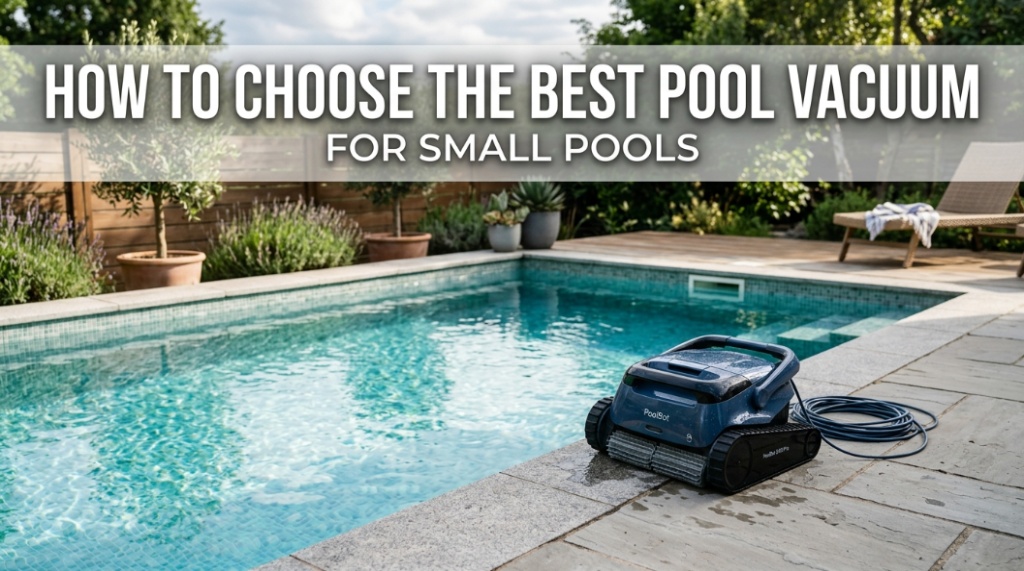

The best pool vacuum for small pools is a lightweight, easy-to-use, and budget-friendly cleaner—typically a manual or compact automatic model that efficiently removes debris without requiring complex installation or high power.
Why Choosing the Right Pool Vacuum Matters
You don’t need a large, expensive machine to keep a small pool clean—but choosing the wrong vacuum can still waste your money and time. Many pool owners buy oversized or underperforming vacuums, only to deal with poor suction, complicated setups, or constant maintenance.
Small pools—like above-ground pools, plunge pools, or compact backyard setups—have different cleaning needs. They collect debris faster due to limited water volume, and inefficient cleaning tools can quickly turn clear water into a cloudy mess.
A pool vacuum designed specifically for small spaces solves this problem. It offers targeted suction, quick cleaning cycles, and affordability without sacrificing performance.
Definition: A pool vacuum for small pools is a compact cleaning device—manual or automatic—designed to remove dirt, debris, and algae efficiently in pools with limited surface area and water volume.
If you want clean water without overspending or overcomplicating your setup, the key is choosing the right type of vacuum—not just the most expensive one.
What types of pool vacuums are best for small pools?
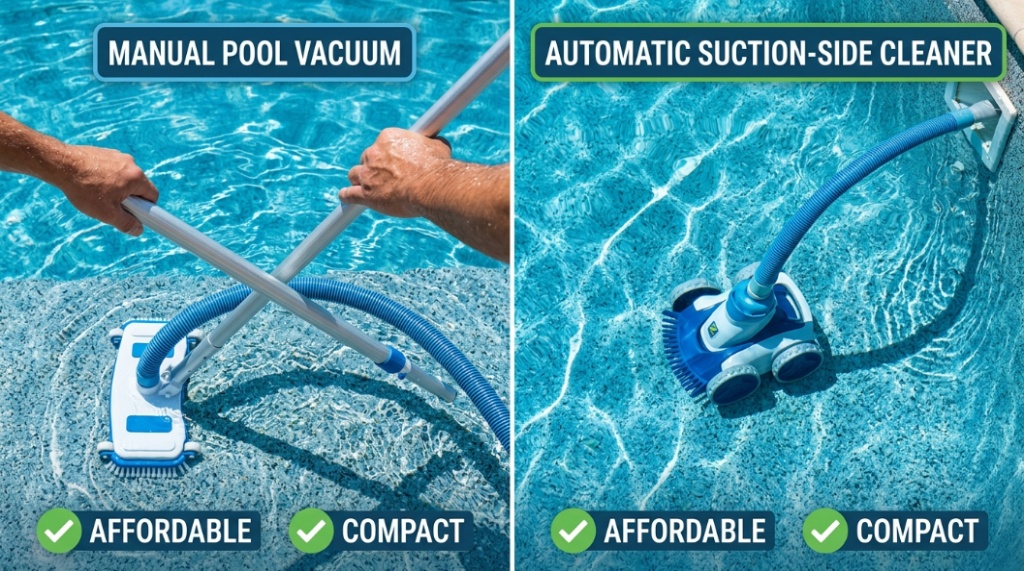
Manual vacuums and small automatic (suction-side or cordless robotic) vacuums are the best options for small pools due to their simplicity, affordability, and efficiency.
Manual Pool Vacuums
Manual vacuums are the most affordable and give you full control over cleaning.
- Best for: Very small pools and tight budgets
- Cost: Low
- Setup: Simple (connect to hose and filter)
- Pros: Precise cleaning, no electricity needed
- Cons: Requires effort and time
Automatic Suction-Side Vacuums
These connect to your pool’s filtration system and move automatically.
- Best for: Small to medium above-ground pools
- Cost: Moderate
- Pros: Hands-free cleaning, simple installation
- Cons: Depends on pump power
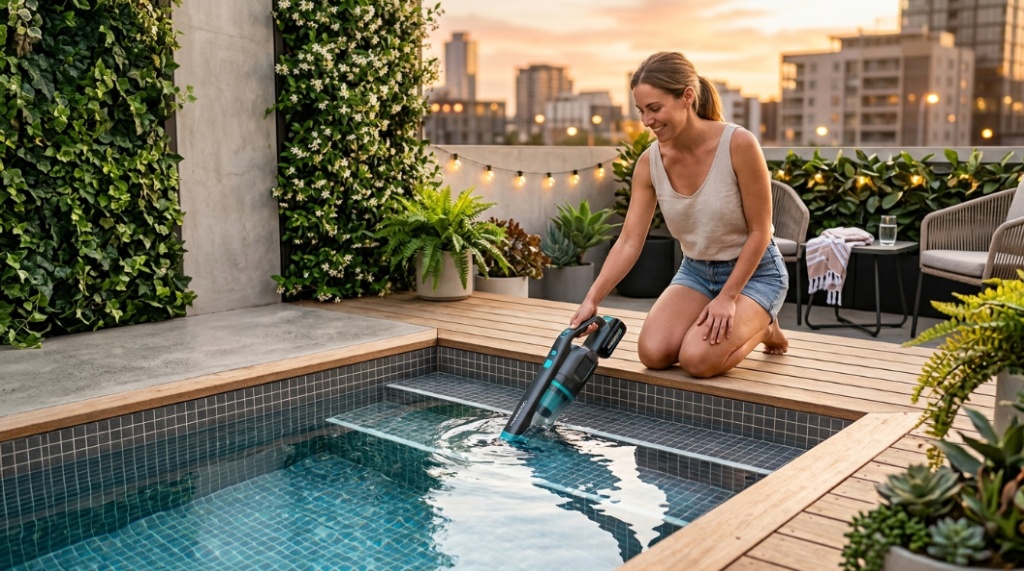
Cordless Robotic Pool Vacuums
These are compact, battery-powered devices ideal for convenience.
- Best for: Small pools with minimal debris
- Cost: Moderate to higher
- Pros: No hoses, easy to use, efficient
- Cons: Limited battery runtime
How do you choose the best pool vacuum for a small pool?
You should choose a pool vacuum based on pool size, debris type, budget, ease of use, and maintenance requirements.
1. Pool Size and Shape
Small pools don’t require powerful, large-scale vacuums. A compact cleaner can cover the entire pool quickly.
2. Type of Debris
- Fine dirt or sand → Requires strong suction
- Leaves or larger debris → Needs a wide intake
- Algae → Requires consistent brushing and suction
3. Ease of Use
If you prefer convenience, choose an automatic or cordless model. Manual vacuums are better if you don’t mind hands-on cleaning.
4. Budget
Small pool owners can typically stay under $200 while still getting reliable performance.
5. Maintenance Needs
Look for models with easy-to-clean filters and minimal parts.
What features should you look for in an affordable pool vacuum?
Look for strong suction, lightweight design, compatibility with small pools, and low maintenance requirements.
- Lightweight Design: Easier handling and storage
- Compact Size: Better maneuverability in small spaces
- Efficient Filtration: Captures fine debris
- Quick Setup: Saves time
- Durability: Ensures long-term use
Are expensive pool vacuums worth it for small pools?
No, expensive pool vacuums are usually unnecessary for small pools because their advanced features are designed for larger spaces.
High-end robotic cleaners often include smart navigation and app control—but these features offer minimal added value in a small pool.
Instead, a well-built affordable vacuum can clean faster and more efficiently due to the smaller area.
Which is better: manual or automatic pool vacuum for small pools?
Manual vacuums are better for budget control and precision, while automatic vacuums are better for convenience and time-saving.
| Feature | Manual Vacuum | Automatic Vacuum |
|---|---|---|
| Cost | Low | Medium |
| Ease of Use | Requires effort | Hands-free |
| Cleaning Control | High | Moderate |
| Maintenance | Low | Moderate |
| Best For | Very small pools | Small to medium pools |
How much should you spend on a pool vacuum for a small pool?
You should spend between $50 and $200 for a quality pool vacuum for small pools, depending on features and automation level.
- $50–$100: Manual vacuums
- $100–$150: Basic automatic vacuums
- $150–$200: Cordless robotic options
Spending more doesn’t always mean better performance for small pools.
Do cordless pool vacuums work well for small pools?
Yes, cordless pool vacuums work very well for small pools because they are easy to use, portable, and efficient for quick cleaning tasks.
They are especially useful if you want to avoid hoses and complicated setups. Most models can clean a small pool in one battery cycle.
How often should you vacuum a small pool?
You should vacuum a small pool at least once a week, or more frequently if it accumulates debris quickly.
- Heavy usage → 2–3 times per week
- Outdoor pools → More frequent cleaning
- After storms → Immediate vacuuming recommended
What are common mistakes when buying a pool vacuum?
The most common mistakes include choosing oversized models, ignoring compatibility, and overpaying for unnecessary features.
- Buying a vacuum designed for large pools
- Ignoring hose or connection compatibility
- Choosing weak suction models
- Overpaying for advanced features
- Not considering maintenance needs
Conclusion: What is the smartest choice for small pool owners?
The smartest choice is a compact, affordable, and easy-to-use vacuum that matches your pool size and cleaning needs. You don’t need advanced features—just reliable performance.
Manual vacuums are ideal if you want full control and minimal cost. Automatic and cordless options are better if you value convenience.
The key is simple: match the vacuum to your pool—not the other way around.
If you want clean water, less effort, and better value, focus on practicality over hype. Choose a vacuum that works efficiently in small spaces and keeps maintenance simple.
FAQ: Best Pool Vacuum for Small Pools
What is the easiest pool vacuum to use for small pools?
Battery-powered cordless vacuums are the easiest to use because they require no hoses, minimal setup, and simple operation.
Can I use a large pool vacuum in a small pool?
Yes, but it’s inefficient. Large vacuums are harder to maneuver and may not clean small areas effectively.
Do small pools need a vacuum?
Yes, small pools need regular vacuuming to remove debris, prevent algae growth, and maintain water clarity.
How long does it take to vacuum a small pool?
It typically takes 10–30 minutes depending on the pool size and debris level.
Are robotic pool vacuums worth it for small pools?
Yes, but only if you value convenience. For budget-conscious users, manual or suction-side vacuums are more cost-effective.
What is the cheapest way to clean a small pool?
A manual vacuum combined with regular brushing and filtration is the most affordable cleaning method.
Can I vacuum a pool without a pump?
Yes, cordless handheld vacuums allow you to clean pools without relying on a filtration system.
📌 Related Reads
👉 Check this guide: choose the best vacuum cleaner for mattress cleaning
👉 Explore use a lightweight vacuum cleaner for easy stair cleaning