
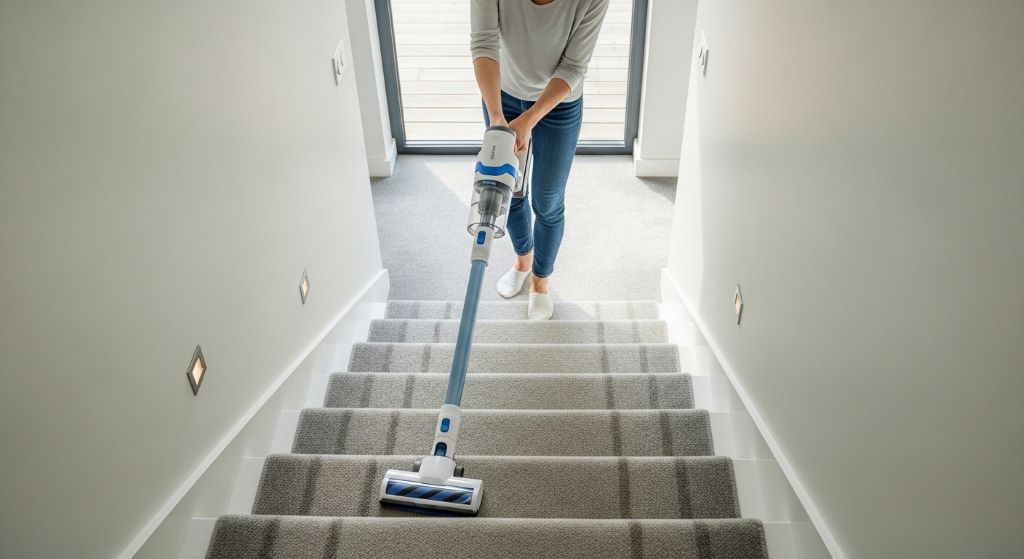

Stairs are one of the most overlooked spots in any home. Dust, pet hair, crumbs, and debris collect in corners and along edges where most full-size vacuums simply cannot reach. If you have ever tried dragging a heavy upright vacuum up and down a staircase, you already know how frustrating the experience can be.
Thankfully, lightweight vacuum cleaners have changed everything. They are easy to carry, simple to maneuver, and surprisingly powerful. However, knowing how to use one correctly makes a big difference in the results you get. This guide covers everything from choosing the right vacuum to using it like a pro on every type of staircase.
Why Stairs Are So Difficult to Clean
Stairs collect dirt faster than most flat surfaces. Every time someone walks up or down, they track in dust, soil, and debris from other parts of the house. The carpet fibers on carpeted stairs trap particles deep inside. Hard-surface stairs, on the other hand, push dust into the corners where the riser meets the tread.
Additionally, the edges and spindles of a staircase create tight spaces that are nearly impossible to clean with wide vacuum heads. Standard vacuums are too large and too heavy to balance on each individual step. Therefore, most people either skip the stairs entirely or do a rushed job with a brush and dustpan.
This is exactly why a light, compact vacuum is so valuable. It fits the task perfectly, both in size and in weight.
What Makes a Vacuum Cleaner Ideal for Stairs
Not every vacuum cleaner is well suited for stair use. There are several characteristics that separate a great stair vacuum from a mediocre one. Understanding these will help you make the best choice for your home.
Weight and Size
Weight is the most critical factor. A vacuum that weighs more than five kilograms quickly becomes tiring to carry up a full staircase. Lightweight models typically weigh between one and three kilograms, making them easy to hold with one hand while you clean with the other.
Size matters too. A compact body allows the vacuum to balance on a single step without tipping over. Additionally, a smaller profile means you can reach into corners and along edges without awkward repositioning.
Suction Power
Lightweight does not mean weak. Modern compact vacuums use powerful motors designed to deliver strong suction in a small package. Look for a vacuum with at least 15 kPa of suction for carpeted stairs. For hard-surface steps, slightly lower suction is acceptable since debris sits on the surface rather than embedded in fibers.
Corded vs. Cordless
This is one of the most important decisions you will make. Corded vacuums offer consistent power without worrying about battery life. However, a cord can become a trip hazard on stairs. Cordless models offer greater freedom of movement and eliminate the cord risk entirely. Therefore, for stair cleaning specifically, cordless is usually the better choice.
Battery life is the main consideration with cordless models. Most modern units offer 20 to 40 minutes of continuous use, which is more than enough for a typical staircase cleaning session.
Attachments and Accessories
A vacuum is only as useful as its attachments. For stairs, the most valuable tools are a crevice tool and a motorized brush head. The crevice tool reaches into tight corners where the step meets the riser and along the edges near the wall. The motorized brush head agitates carpet fibers to pull out embedded dirt and hair.
Additionally, a dusting brush attachment is helpful for cleaning the spindles, handrail, and skirting board alongside the staircase.
Setting Up Before You Start
A little preparation before you begin will make the job faster and more thorough. Therefore, take a few minutes to get ready rather than diving straight in.
First, remove any objects from the stairs. Shoes, bags, and other items block your path and make it harder to clean each step fully. Second, check the dustbin or bag in your vacuum. Starting with a full bin reduces suction power noticeably. Empty it before you begin for best results.
Third, select the right attachment for your stair type. If you have carpeted stairs, attach the motorized brush head. If your stairs are wood, tile, or laminate, use the standard floor nozzle or the soft brush head to avoid scratching the surface.
Finally, plan your direction. Always clean from the top of the stairs down to the bottom. This ensures that any debris you dislodge from upper steps falls onto uncleaned steps below, where you will pick it up as you work your way down.
Step-by-Step Guide to Cleaning Carpeted Stairs
Carpeted stairs require a slightly different technique than hard-surface steps. Follow these steps for the best results.
- Start at the top step and work your way down. Position yourself either one step below the step you are cleaning or to the side, whichever feels more stable.
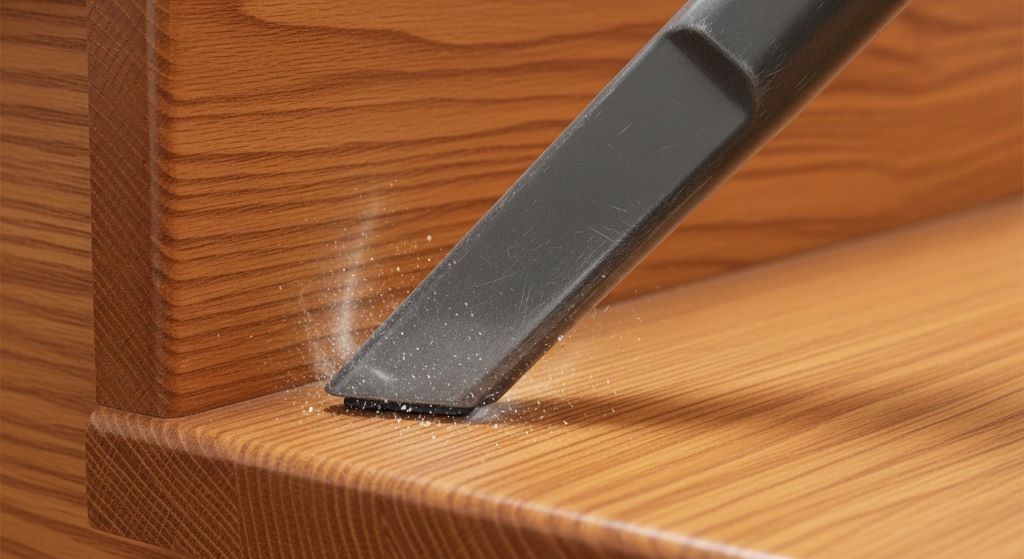
- Begin with the crevice tool. Run it along the back of the step where the tread meets the riser. This strip collects the most hair and dust. Work the tool slowly and apply light pressure to draw debris out of the corner.
- Switch to the motorized brush head. Move it across the tread in slow, overlapping strokes. Go from the outer edge toward the wall, then from the back to the front of the step. Overlapping strokes ensure you do not miss any areas.
- Pay extra attention to the sides of each step. These areas are often ignored but collect a surprising amount of hair and lint.
- Move to the next step down and repeat the process. Do not rush. Slow, deliberate strokes outperform quick passes every time.
Additionally, if your stairs have a runner rug rather than full carpet, lift the edges of the runner occasionally and vacuum underneath. Dirt accumulates under the edges of runners and creates odors over time.
Step-by-Step Guide to Cleaning Hard-Surface Stairs
Hard-surface stairs, whether wood, tile, or stone, are slightly easier to clean than carpeted stairs. However, they require a gentler touch to avoid scratches.
- Start at the top and work downward. Attach the soft brush head or the standard floor nozzle to your vacuum.
- Use the crevice tool first to clear the corners and edges of each step. On hard surfaces, dust and crumbs tend to gather along the edges where the step meets the wall or baseboard.
- Switch to the floor nozzle and make slow, even passes across each tread. Avoid pressing too hard on polished wood or stone as this can create fine scratches over time.
- After vacuuming, a quick wipe with a damp microfiber cloth will pick up any remaining fine dust that the vacuum missed. This step is optional but gives a noticeably cleaner result.
Therefore, combining vacuuming with a light wipe-down is the most effective approach for hard-surface stairs.
Cleaning the Edges, Spindles, and Handrail
The staircase is more than just the treads. The spindles, handrail, and skirting board along the side all collect dust and need regular attention. A portable vacuum cleaner with a dusting brush attachment handles these surfaces perfectly.
Run the dusting brush along the top of the handrail in a single smooth motion. Then work the brush between and around each spindle. For square spindles, you may need to make several passes to clean all four sides.
The skirting board or baseboard running alongside the stairs is another dust trap. A crevice tool or dusting brush along the top edge of the skirting board will quickly remove accumulated dust.
Additionally, if your staircase has a wall on one or both sides, run the crevice tool along the join between the wall and the carpet or floor. This is one of the dirtiest spots on any staircase.
How Often Should You Clean Your Stairs
The frequency of stair cleaning depends on the level of foot traffic and whether you have pets. Here is a general guide to help you plan a routine as part of your regular home maintenance schedule.
- High-traffic homes with children or pets: clean stairs at least twice a week. Pet hair and tracked-in dirt accumulate very quickly in these households.
- Average households with two to four people: once a week is usually sufficient to keep stairs clean and presentable.
- Single occupant or low-traffic homes: every ten to fourteen days is acceptable, though a quick once-over with the crevice tool every few days helps prevent buildup.
Regular cleaning not only keeps your home looking good but also extends the life of carpeted stairs. Dirt particles act like tiny blades inside carpet fibers. Over time, they cut the fibers and cause premature wear. Therefore, consistent cleaning is genuinely an investment in your home.
Maintaining Your Lightweight Vacuum for Long-Term Performance
A well-maintained vacuum lasts much longer and performs much better. Simple care habits keep your machine running at full power. Integrating this into your broader home maintenance routine takes very little time.
- Empty the dustbin after every use. A full bin reduces suction and can cause the motor to overheat.
- Wash or replace the filter regularly. Most manufacturers recommend cleaning the filter every month and replacing it every six to twelve months depending on usage.
- Check the brush roll for tangled hair. Long hair wraps around motorized brush heads and reduces their effectiveness. Use scissors to cut away tangles every few weeks.
- Inspect the attachments for blockages. Small items like rubber bands or pieces of fabric can get stuck in crevice tools and reduce airflow.
- Store the vacuum in a dry place away from direct sunlight. UV light can degrade plastic components and battery casings over time.
Additionally, charge cordless models properly. Avoid leaving them on the charger for extended periods once fully charged, as this can shorten battery lifespan.
Safety Tips for Vacuuming Stairs
Stairs are, by their nature, a fall risk. Taking a few precautions while cleaning will keep you safe throughout the process.
- Wear non-slip footwear. Socks on carpeted stairs can be just as slippery as bare feet on hard-surface stairs.
- Keep one hand on the handrail when moving between steps. Do not carry the vacuum in a way that leaves both hands occupied while stepping.
- If using a corded model, keep the cord behind you and away from the steps you are standing on. A cord underfoot is a serious trip hazard.
- Never lean forward off a step to reach further. Reposition yourself instead. Overreaching is how accidents happen.
Therefore, a few moments of careful preparation can prevent a potentially serious fall. Safety should always come first, even during routine cleaning tasks.
Conclusion
Cleaning stairs does not have to be a dreaded chore. With the right lightweight vacuum and a simple technique, it becomes a quick and satisfying task. The key is choosing a vacuum that is compact and powerful, using the correct attachments for your stair type, and working methodically from top to bottom.
Remember to clean the corners and edges first with a crevice tool, then cover the treads with a brush head. Do not forget the spindles, handrail, and skirting board. Additionally, clean your vacuum regularly to keep it performing at its best.
Whether you have plush carpet, polished wood, or sleek tile stairs, a good portable vacuum cleaner makes the job manageable for everyone. Build stair cleaning into your regular routine and you will notice a real difference in how clean and fresh your entire home feels.
Frequently Asked Questions
1. Can I use a handheld vacuum for stairs instead of a stick vacuum?
Yes, handheld vacuums work well for stairs, especially for quick clean-ups. However, they typically have smaller dustbins and shorter battery life than stick vacuums. For a thorough weekly clean of a full staircase, a lightweight stick vacuum with attachments will give you better results.
2. How do I remove pet hair from carpeted stairs effectively?
Use a motorized brush head attachment. The spinning bristles agitate the carpet fibers and loosen embedded pet hair so the suction can pull it out. Running the vacuum in two directions, first horizontally across the step and then from back to front, helps lift stubborn hair that a single-direction pass might miss.
3. Is a cordless vacuum powerful enough for deeply soiled carpeted stairs?
Modern cordless vacuums have improved significantly in power. Many models now match corded vacuums in suction strength. For heavily soiled carpet, run the motorized brush head over each step slowly and repeat the pass two or three times. However, if your stairs have not been cleaned in a long time, a deeper clean with a corded model first is advisable.
4. What is the best way to clean stair edges and tight corners?
The crevice tool is your best friend for tight corners. Press the narrow tip firmly into the corner where the tread meets the riser and drag it slowly along the full width of the step. Do the same along the wall edge. These two strips collect the majority of debris on any staircase.
5. How do I prevent my lightweight vacuum from tipping off a step while I clean?
Keep the vacuum body on a flat part of the step at all times. Most lightweight vacuums are designed with a low center of gravity for this reason. Avoid resting the vacuum on the edge of a step or at an angle. If the step is too small to support the vacuum safely, hold it in your hand while using the attachment with the other hand.
Related Topics:
How to Clean Stainless Steel Cutlery: A Comprehensive Guide
How To Clear A Clogged Drain In A Bathtub


