What is the best way to choose a vacuum cleaner for mattress cleaning?
The best way to choose a vacuum cleaner for mattress cleaning is to select a model with strong suction power, a HEPA filtration system, a motorized brush or upholstery tool, and compact maneuverability designed for fabric surfaces.
Most people vacuum their floors regularly but ignore the mattress they sleep on every night. Over time, mattresses collect dust mites, allergens, dead skin cells, pet hair, and bacteria. According to the American Academy of Allergy, Asthma & Immunology, mattresses can contain millions of dust mites after just a few years of use.
If your vacuum cleaner lacks the right attachments or filtration, it won’t remove these contaminants effectively. That can lead to allergies, poor sleep quality, odors, and reduced mattress lifespan.
This guide explains exactly how to choose a vacuum cleaner for mattress cleaning, what features matter most, which mistakes to avoid, and how to pick the right model for your needs.
Why do you need a special vacuum cleaner for mattress cleaning?
You need a vacuum cleaner designed for mattress cleaning because standard floor vacuums often lack the filtration, attachments, and suction precision required to remove embedded allergens and dust mites.
Mattresses trap microscopic particles deep inside their fibers. These include:
- Dust mites
- Skin flakes
- Pet dander
- Pollen
- Mold spores
- Bacteria
A standard vacuum head usually cleans only the surface. A mattress-specific vacuum setup penetrates deeper layers.
Studies show that proper mattress vacuuming can reduce allergen levels by up to 80% when combined with HEPA filtration and rotating brush agitation.
What features should you look for in a mattress vacuum cleaner?
The most important features include strong suction power, HEPA filtration, upholstery attachments, a motorized brush roll, lightweight handling, and sealed airflow technology.
Why is suction power important for mattress cleaning?
High suction power removes deeply embedded dust mites and allergens that settle below the mattress surface.
Look for:
- High-wattage motors (500W+ handheld models)
- Adjustable suction control
- Consistent airflow performance
Weak suction only lifts surface debris. Strong suction extracts hidden contaminants.
Is HEPA filtration necessary for mattress cleaning?
Yes, HEPA filters trap 99.97% of particles as small as 0.3 microns, preventing allergens from re-entering the air.
This matters especially if you suffer from:
- Asthma
- Dust allergies
- Pet allergies
- Sensitive skin conditions
Without HEPA filtration, vacuuming can redistribute allergens instead of removing them.
Why do upholstery attachments matter?
Upholstery tools allow targeted cleaning across mattress fabric without damaging delicate fibers.
The best attachments include:
- Motorized brush heads
- Wide upholstery nozzles
- UV sterilization heads (optional but useful)
- Crevice tools for mattress edges
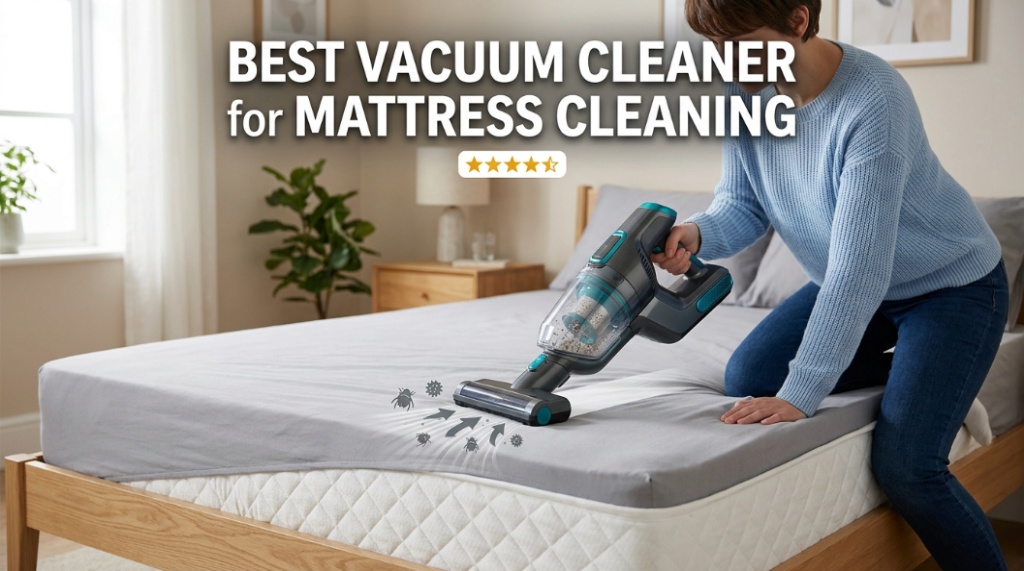
Are handheld vacuums better than upright vacuums for mattresses?
Handheld vacuums are usually better for mattress cleaning because they provide precision control, portability, and specialized upholstery attachments.
| Feature | Handheld Vacuum | Upright Vacuum |
|---|---|---|
| Portability | Excellent | Limited |
| Mattress maneuverability | High | Moderate |
| Storage size | Compact | Bulky |
| Deep cleaning power | Strong (with motorized head) | Strong |
| Best use case | Mattress + upholstery | Whole-home cleaning |
If your primary goal is mattress cleaning, handheld models are usually the smarter choice.
Do mattress vacuums with UV light really work?
Yes, UV mattress vacuums can reduce bacteria and dust mites when combined with strong suction and brush agitation.
Ultraviolet-C (UV-C) light disrupts microorganism DNA. Many mattress-specific vacuums use this feature to improve hygiene.
However, UV light alone is not enough. It works best alongside:
- Motorized brush vibration
- HEPA filtration
- High suction airflow
Think of UV as a bonus feature rather than a replacement for suction.
How much suction power is enough for mattress cleaning?
A vacuum cleaner with at least 10–16 kPa suction power or 400–600 watts is generally effective for mattress cleaning.
Higher suction power helps remove:
- Dust mite waste particles
- Embedded allergens
- Pet hair trapped in fibers
- Skin flakes inside foam layers
For allergy-sensitive households, stronger suction is especially important.
Is a cordless vacuum cleaner good for cleaning mattresses?
Yes, cordless vacuum cleaners are convenient for mattress cleaning if they provide strong suction and at least 20 minutes of runtime.
Cordless models offer:
- Easy maneuverability
- Flexible positioning
- Quick spot cleaning
- Portable storage
However, always check battery capacity. Low-power cordless models often lose suction quickly.
What type of brush roll works best for mattress cleaning?
A motorized brush roll with soft bristles works best because it loosens embedded dust while protecting mattress fabric.
Look for:
- Anti-tangle brush design
- Soft rotating bristles
- High-frequency vibration heads
These features improve allergen removal without damaging upholstery.
Can regular vacuum cleaners damage mattresses?
Yes, vacuum cleaners with stiff brush rolls or excessive pressure can damage mattress fabric and internal foam layers.
Avoid:
- Hard floor brushes
- Metal-edged attachments
- Overpowered agitation heads
Always use upholstery-safe attachments instead.
What filtration system is best for allergy sufferers?
A sealed HEPA filtration system is best because it captures microscopic allergens without releasing them back into the air.
Advanced filtration systems may include:
- Multi-layer cyclone separation
- Activated carbon odor filters
- Washable pre-filters
These improve indoor air quality during mattress cleaning.
How often should you vacuum your mattress?
You should vacuum your mattress at least once every two weeks to control allergens and maintain hygiene.
If you have pets or allergies, weekly vacuuming is recommended.
Routine cleaning helps:
- Extend mattress lifespan
- Reduce odor buildup
- Prevent dust mite accumulation
- Improve sleep hygiene
What mistakes should you avoid when choosing a mattress vacuum cleaner?
Avoid selecting vacuums based only on price, brand reputation, or floor-cleaning performance without checking mattress-specific features.
Common mistakes include:
- Ignoring filtration quality
- Choosing weak handheld models
- Skipping upholstery attachments
- Overlooking weight and maneuverability
- Buying vacuums without sealed airflow systems
Choosing the wrong model reduces cleaning effectiveness significantly.
Which type of vacuum cleaner is best for removing dust mites from mattresses?
A handheld HEPA vacuum with a motorized brush head and vibration technology is the most effective option for removing dust mites.
Some advanced models include:
- UV sterilization lamps
- Allergen sensors
- Anti-microbial filtration layers
These features improve deep cleaning results.
Conclusion: What is the best vacuum cleaner for mattress cleaning?
The best vacuum cleaner for mattress cleaning combines strong suction power, HEPA filtration, upholstery attachments, and lightweight maneuverability designed specifically for fabric surfaces.
Choosing the right vacuum helps reduce allergens, improve sleep hygiene, and extend mattress lifespan. A specialized handheld vacuum with sealed filtration and a motorized brush head typically delivers the best results.
If mattress hygiene matters to you, investing in the right vacuum cleaner is one of the simplest ways to create a healthier sleeping environment.
Start by checking your current vacuum’s filtration, attachments, and suction strength. Upgrading even one of these features can significantly improve mattress cleanliness and indoor air quality.
Frequently Asked Questions About Choosing a Mattress Vacuum Cleaner
Can I use a regular vacuum cleaner to clean my mattress?
Yes, but only if it includes an upholstery attachment and HEPA filtration. Otherwise, it may remove surface dust without eliminating deep allergens.
What suction level is best for mattress cleaning?
A suction level between 10–16 kPa or 400–600 watts is ideal for effective allergen removal from mattress fibers.
Are UV mattress vacuums safe to use?
Yes, UV mattress vacuums are safe when used properly and can help reduce bacteria and dust mites alongside mechanical suction.
How long should I vacuum my mattress?
Vacuum each mattress side for 5–10 minutes using slow overlapping strokes for best results.
Do mattress vacuums remove bed bugs?
They can remove some surface bed bugs but should not replace professional pest treatment for infestations.
Is HEPA filtration necessary for allergy sufferers?
Yes, HEPA filtration prevents allergens from recirculating into indoor air during cleaning.
Read More Also Best Vacuum Cleaner for Mattress Cleaning
Discover More Six Ways to Improve your Bedroom