
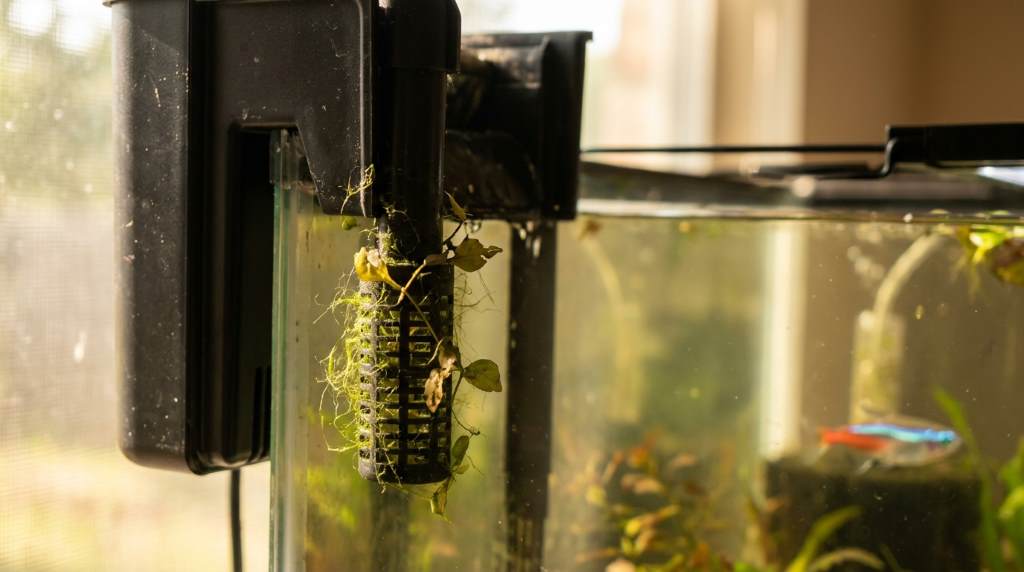

The best way to stop aquarium filter clogs in Austin, TX, involves controlling debris before it reaches filter media. Clean the intake regularly, avoid overfeeding, maintain sensible stocking, and rinse media with aquarium water. Most freshwater aquariums benefit from 20% to 30% weekly water changes when maintained consistently. Additionally, removing surface buildup can get rid of tank scum before it spreads through the system.
Key Takeaways
- Clean the filter intake before heavy debris restricts water movement.
- Rinse biological media using removed aquarium water, never untreated tap water.
- Feed fish smaller portions to reduce uneaten food and organic waste.
- Use a pre-filter sponge when fine debris repeatedly reaches the filter.
- Adjust maintenance around Austin’s seasonal heat, pollen, and evaporation.
- Replace damaged mechanical media instead of repeatedly washing ineffective material.
Why Aquarium Filters Clog So Quickly in Austin
Filter clogs usually begin with ordinary waste rather than a sudden equipment failure. Fish waste, uneaten food, plant fragments, algae, and suspended particles gradually collect inside mechanical media.
However, local conditions can make that buildup more noticeable. Austin homes can experience substantial dust, pollen, outdoor debris, and seasonal temperature changes.
Therefore, tanks near windows, doors, vents, or busy household areas may collect debris faster. Strong sunlight can also encourage algae growth, increasing the material your filter must capture.
Overfeeding creates another common problem because leftover food breaks down into smaller organic particles. Those particles enter the intake and quickly load filter sponges.
Similarly, overcrowding increases waste production beyond what a small filtration system can comfortably process. A properly sized filter still needs regular mechanical cleaning.
Water chemistry can also influence maintenance demands. Austin tap water may contain disinfectants, so always use a conditioner designed for your water supply.
Before changing filter media, identify whether the restriction comes from the intake, impeller, sponge, or tubing. That simple check prevents unnecessary replacements and protects beneficial bacteria.
Build a Filter Setup That Resists Clogs
A clog-resistant setup starts with mechanical filtration that captures debris without becoming restrictive too quickly. A coarse sponge usually handles larger particles better than extremely fine material alone.
For households managing frequent maintenance, a pre-filter sponge can protect the main intake. This approach also makes routine cleaning faster because you can remove one accessible component.
Keep the intake several inches above the substrate when possible. That position reduces the amount of gravel, sand, and settled waste entering the filter.
Furthermore, choose filtration based on tank volume, livestock load, and biological demand. A filter rated for the exact tank size may struggle with heavy stocking.
When planning aquarium equipment, broader home maintenance principles can also help. For example, letting agents deal tenancy renewals illustrates how scheduled checks prevent small issues from becoming larger problems.
Keep filter tubing as short and straight as practical. Excessive bends can reduce flow and make an otherwise clean system appear clogged.
Also inspect the filter’s impeller housing during maintenance. Small gravel pieces, plant fragments, or snail shells can interfere with the impeller.
Choose Mechanical Media Carefully
Coarse foam works well for larger debris and usually supports repeated cleaning. Fine polishing pads capture smaller particles but require more frequent attention.
Use fine media strategically instead of filling every filter chamber with dense material. Otherwise, trapped particles can restrict flow surprisingly quickly.
Layering can improve maintenance because each stage handles a different particle size. Place coarse mechanical material before finer filtration stages.
Clean Filter Media Without Destroying Beneficial Bacteria
Many aquarists create new problems by cleaning filters too aggressively. Beneficial nitrifying bacteria live across filter surfaces, especially inside established biological media.
Instead, remove some aquarium water during a routine water change. Gently squeeze dirty sponges inside that removed water until major debris leaves the material.
Never scrub every filter component until it looks factory-clean. Preserve established biological surfaces whenever the filter still provides adequate water flow.
For biological media, gentle swishing usually works better than aggressive washing. Replace biological media only when it physically deteriorates or cannot function properly.
If you use chemical media, follow the manufacturer’s replacement interval. Activated carbon becomes less useful over time as its adsorption capacity declines.
Also, avoid replacing all established media simultaneously. Staggering replacements helps preserve bacterial colonies during maintenance.
A practical home-energy perspective can also improve equipment planning. solar battery storage moved positioned shows why careful equipment placement matters during household projects.
How Often Should You Clean Aquarium Filter Media?
Inspect mechanical media weekly, especially when the tank contains messy eaters or many fish. Clean it whenever flow noticeably weakens or debris visibly blocks the material.
Many aquariums need mechanical-media cleaning every one to four weeks. However, actual frequency depends on stocking, feeding, plants, substrate, and filter design.
Biological media generally needs much less frequent cleaning. Only rinse it when accumulated debris begins restricting water movement.
Control the Waste That Causes Filter Clogs
The easiest filter clog to remove is the one you prevent from entering the filter. Feeding habits therefore matter as much as mechanical maintenance.
Feed only what your fish can consume within a few minutes. Remove obvious leftovers before they settle into gravel or plants.
Frozen foods can introduce additional fine particles and nutrient-rich water. Thaw portions separately and drain excess liquid when practical.
Likewise, avoid dropping large food portions into a lightly stocked aquarium. Smaller meals reduce waste while giving fish adequate nutrition.
Stocking levels also deserve attention because every fish contributes organic waste. If maintenance constantly feels excessive, reassess the biological load before upgrading equipment.
Plants can create filter debris when leaves deteriorate. Remove dying leaves promptly, particularly after trimming or major aquascaping changes.
Snails can also enter intake systems and interfere with impellers. A suitable intake guard can prevent both snails and larger debris from entering.
Reduce Substrate and Plant Debris
Vacuum the substrate during water changes without aggressively disturbing every area. Focus on visible waste accumulation around feeding zones and sheltered corners.
Trim dead plant material before it breaks into smaller fragments. Large fragments are easier to remove manually than fine particles circulating through the tank.
For sand substrates, maintain enough circulation to prevent excessive debris accumulation. However, avoid creating currents strong enough to constantly disturb the substrate.
Adapt Aquarium Maintenance to Austin Conditions
Austin’s environment can influence how quickly an aquarium accumulates unwanted material. Outdoor pollen and household dust can enter open-top aquariums through normal airflow.
During heavy pollen periods, inspect the tank lid and filter intake more frequently. A fitted aquarium cover can reduce airborne debris entering the water.
Summer heat also deserves attention because warmer water holds less dissolved oxygen. Increased evaporation can concentrate dissolved minerals while lowering the water level.
Top off evaporated water with properly prepared water rather than repeatedly ignoring declining water levels. Keep replacement water close to the aquarium’s required temperature.
Strong sunlight can encourage algae growth, especially when the tank sits near an uncovered window. Move the aquarium or reduce direct exposure if algae repeatedly overwhelms filtration.
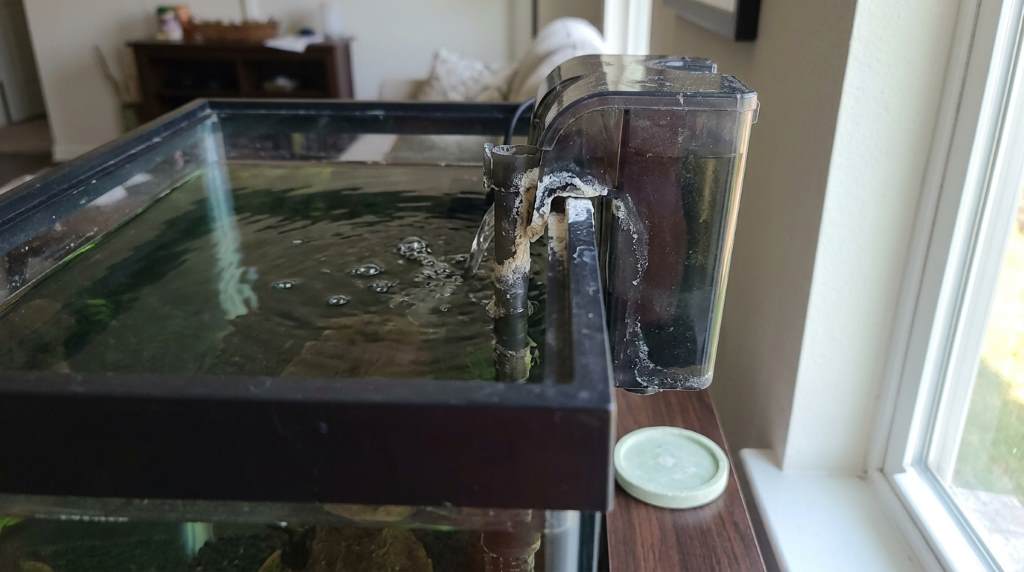
Hard-water deposits can also appear around equipment and filter housings. Those deposits differ from internal debris, so address them separately during maintenance.
When mineral buildup affects removable components, follow the equipment manufacturer’s cleaning instructions. Never use household cleaners, detergents, or unapproved chemicals around aquarium equipment.
Roof conditions can similarly reveal why routine inspection matters in homes. curling shingle damage indicates how small warning signs can reveal developing maintenance problems.
A Simple Weekly Filter Maintenance Routine
A consistent routine works better than occasional intensive cleaning. Set one weekly maintenance period and inspect the entire filtration path.
Start by checking water movement at the filter outlet. Weak flow often provides the earliest visible warning of mechanical restriction.
Next, inspect the intake for algae, plant fragments, and accumulated debris. Remove the pre-filter sponge if installed and rinse it using removed aquarium water.
Then check the filter chamber and mechanical media. Clean only the material that actually restricts flow or contains substantial debris.
Inspect the impeller whenever flow remains weak after cleaning the sponge. Remove visible particles carefully and check the impeller for damage.
Finally, verify that tubing remains unobstructed and connections stay secure. Restore the filter and confirm steady flow before completing the maintenance session.
Five-Minute Inspection Checklist
- Check outlet flow.
- Inspect the intake screen.
- Remove visible plant fragments.
- Rinse the pre-filter sponge.
- Check mechanical media.
- Inspect the impeller.
- Confirm clear tubing.
- Verify stable water level.
Know When a Clog Signals a Bigger Problem
Repeated clogs can indicate more than dirty filter media. They may reveal excessive feeding, overstocking, poor intake placement, or unsuitable filtration.
If flow drops soon after cleaning, inspect the impeller and intake assembly. Persistent restriction can also indicate damaged tubing or internal mechanical problems.
Cloudy water combined with heavy debris may suggest excessive organic waste. Review feeding, stocking, maintenance, and substrate conditions before adding more filtration.
Sudden filter failure requires faster action because oxygen levels can decline in a heavily stocked aquarium. Restore circulation quickly and increase surface agitation if necessary.
If the filter stops completely, avoid leaving fish without circulation for extended periods. Follow the equipment manufacturer’s emergency and restart instructions.
Never replace a functioning filter solely because the media looks dirty. Dirty mechanical media often indicates that the filter is successfully capturing suspended waste.
Filter Maintenance Mistakes to Avoid
Several common habits make aquarium filters clog faster. Fortunately, most of them require simple changes rather than expensive equipment.
- Overfeeding: Excess food becomes filter-loading organic waste.
- Overcleaning: Aggressive washing can remove beneficial biological surfaces.
- Wrong media order: Fine media placed first can clog prematurely.
- Low intake placement: The filter collects excessive substrate and settled debris.
- Ignoring flow changes: Delayed cleaning allows compacted debris to restrict circulation.
- Replacing everything: Complete media replacement can disrupt established biological filtration.
When Should You Upgrade Your Aquarium Filter?
Upgrade filtration when the current system cannot maintain reliable circulation despite proper maintenance. Choose capacity based on actual livestock demands rather than tank volume alone.
A larger filter can provide more media capacity and longer intervals between mechanical cleanings. However, greater capacity cannot compensate for chronic overstocking or excessive feeding.
Consider a model with separate mechanical and biological chambers when maintenance repeatedly disrupts established media. This design lets you clean mechanical material without disturbing biological media.
For tanks with heavy particulate waste, prioritize accessible mechanical filtration. Easy access encourages regular cleaning and reduces the temptation to postpone maintenance.
Quick Troubleshooting Guide
| Problem | Likely Cause | First Action |
|---|---|---|
| Weak water flow | Dirty sponge or intake | Inspect and rinse mechanical media |
| Filter stops suddenly | Blocked impeller | Inspect the impeller chamber |
| Frequent sponge clogs | Excess debris production | Reduce feeding and inspect stocking |
| Fine particles circulate | Insufficient polishing media | Add suitable fine mechanical media |
| Algae blocks intake | Excessive light or algae growth | Clean intake and reduce direct light |
| Filter clogs overnight | Heavy waste or deteriorating plants | Inspect substrate and feeding habits |
Frequently Asked Questions
How often should I clean my aquarium filter in Austin?
Inspect the filter weekly and clean mechanical media whenever debris noticeably restricts water flow.
Can tap water damage beneficial aquarium bacteria?
Untreated tap water can harm beneficial bacteria, so rinse established media using removed aquarium water.
Why does my fish tank filter clog overnight?
Overnight clogs usually indicate excessive debris, deteriorating plant material, overfeeding, or an undersized mechanical filter.
Does a pre-filter sponge prevent aquarium filter clogs?
Yes, a properly fitted pre-filter sponge captures larger debris before it reaches the main filter media.
Should I replace my aquarium filter when it clogs frequently?
Not necessarily, because correcting feeding, stocking, intake placement, and media configuration may solve recurring clogs.
Conclusion
Stopping aquarium filter clogs in Austin requires prevention, observation, and consistent mechanical maintenance. Control food waste, protect the intake, clean media correctly, and adapt inspections to local environmental conditions.
Start with the simplest changes before buying new equipment. If your filter still loses flow repeatedly, inspect the impeller, tubing, media arrangement, and aquarium stocking.
For persistent filtration problems, consult an experienced aquarium professional who can evaluate the entire system. A properly maintained filter protects water quality, supports beneficial bacteria, and keeps fish healthier.


