
You can lower high AC bills in Orlando by improving airflow, sealing leaks, controlling humidity, and reducing peak electricity demand. Orlando recently faced heat indexes above 110°F, while OUC recorded a new summer demand record during extreme heat. rubberized mobile home roof coating can also help protect certain roofs and reduce heat entering vulnerable spaces. Smart AC maintenance matters because every inefficient cooling hour adds unnecessary electricity costs.
Key Takeaways for Lower Orlando AC Bills
- Set a practical thermostat temperature instead of forcing extreme cooling.
- Replace clogged filters before restricted airflow makes your system work harder.
- Seal duct leaks and improve insulation around the conditioned living area.
- Use ceiling fans to improve comfort without lowering the thermostat.
- Schedule professional AC maintenance before Orlando’s hottest periods.
- Reduce simultaneous appliance use when your utility charges for peak demand.
1. Find Out Why Your AC Bill Suddenly Increased
Start by comparing your latest electricity usage with the previous few months. A higher bill does not always mean your AC suddenly became inefficient. First, check whether your household used more kilowatt-hours because of longer cooling cycles or unusually intense heat.
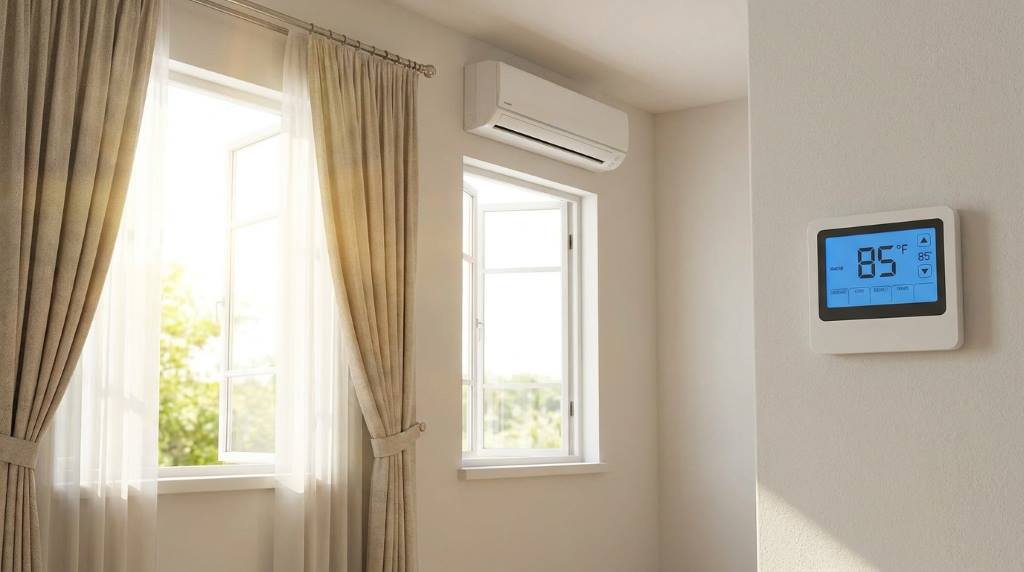
Next, inspect the thermostat settings and cooling schedule. If your system runs almost continuously while indoor temperatures remain uncomfortable, investigate airflow, refrigerant performance, duct leakage, or insulation.
Also examine your electric bill for changes in pricing or demand charges. OUC plans to introduce DemandLevel pricing for Orlando customers beginning with November 2026 bills, based partly on peak 15-minute usage.
That change makes usage timing more important for some Orlando households. Therefore, reducing unnecessary electrical peaks can complement traditional AC efficiency improvements.
2. Improve Roof and Attic Heat Protection
Your AC cannot solve every heat problem inside a poorly protected building envelope. A hot roof can transfer substantial heat toward the attic and conditioned spaces, especially when insulation performs poorly.
Begin by checking attic insulation depth, ventilation, radiant barriers, and visible air leaks. If your home has roofing concerns, understanding changing roof when converting can provide useful context before major remodeling.
For suitable roof systems, reflective materials or properly applied coatings can reduce solar heat absorption. However, never treat a coating as a substitute for damaged roofing, adequate insulation, or proper attic ventilation.
Furthermore, inspect the ceiling plane around recessed lights, attic hatches, plumbing penetrations, and duct openings. Sealing these leakage points helps prevent conditioned air from escaping into hot attic spaces.
Check These Roof and Attic Areas
- Attic insulation: Look for thin, compressed, displaced, or moisture-damaged material.
- Roof surface: Check for aging materials, exposed areas, and obvious deterioration.
- Attic ventilation: Confirm that vents remain unobstructed and properly configured.
- Ceiling penetrations: Seal gaps around pipes, wiring, ducts, and attic access panels.
3. Fix Airflow Problems Before Replacing the AC
Restricted airflow forces an AC system to work longer while delivering less useful cooling. Consequently, homeowners sometimes blame the equipment when the real problem sits inside the distribution system.
Replace disposable filters according to their condition and manufacturer guidance. A heavily loaded filter can reduce airflow, increase operating time, and make rooms feel warmer.
Then check supply registers and return grilles. Keep furniture, curtains, storage boxes, and rugs from blocking them, because the system needs unrestricted air movement.
Professional duct testing can reveal leakage that simple visual inspection misses. For broader roofing context, patio roof extension drainage also illustrates why exterior water management matters around home improvements.
Leaky ducts can waste conditioned air before it reaches occupied rooms. Sealing accessible duct joints and repairing damaged insulation can therefore improve comfort without immediately buying new equipment.
4. Control Humidity Instead of Chasing Lower Temperatures
Orlando’s humid climate can make moderate temperatures feel uncomfortable. As a result, lowering the thermostat repeatedly may increase electricity consumption without addressing the actual comfort problem.
Keep doors and windows closed while the AC operates. Also, avoid leaving exterior doors open for extended periods because humid outdoor air increases the cooling load.
Use bathroom and kitchen exhaust fans appropriately, but do not operate them longer than necessary. These fans remove indoor air that your AC already spent energy cooling and dehumidifying.
If humidity remains high despite normal AC operation, have a technician evaluate system sizing and performance. An oversized system can cool quickly without running long enough to remove sufficient moisture.
Comfort Improvements That Cost Little
- Close blinds or curtains during strong afternoon sunlight.
- Use ceiling fans while people occupy the room.
- Keep interior doors positioned to support the home’s airflow pattern.
- Limit unnecessary heat-producing activities during the hottest afternoon hours.
5. Use Your Thermostat More Strategically
A thermostat should maintain reasonable comfort without demanding unnecessary cooling. Setting an extremely low temperature does not make an AC cool the home proportionally faster.
Instead, choose a comfortable temperature and adjust it upward when the home remains empty. A programmable or smart thermostat can automate these changes and prevent forgotten settings.
However, avoid aggressive temperature swings if they make the system run excessively when you return. A moderate setback usually provides a more practical balance between comfort and energy savings.
Smart controls can also reveal unusual runtime patterns. If cooling runs far longer than expected on normal days, treat that pattern as a maintenance warning rather than simply lowering the thermostat.
6. Reduce Peak Electricity Demand in Orlando
AC consumption becomes particularly important when several high-power appliances operate simultaneously. OUC’s DemandLevel system measures the highest electricity demand during a 15-minute period, making timing relevant for affected customers.
For example, avoid running laundry, cooking appliances, pool equipment, and other major loads simultaneously when the AC already works heavily. Staggering those activities can reduce your household’s peak demand.
OUC specifically recommends spreading activities such as laundry, cooking, and dishwashing instead of running major appliances together. Its appliance calculator also estimates demand from central AC and other household equipment.
This strategy does not require sacrificing comfort. Instead, it changes when you consume electricity, which can become increasingly useful under demand-based pricing.
7. Schedule AC Maintenance Before Performance Drops
Preventive maintenance often costs less than ignoring a system until it fails during extreme heat. A professional technician can inspect electrical components, airflow, coils, refrigerant performance, drainage, and overall system operation.
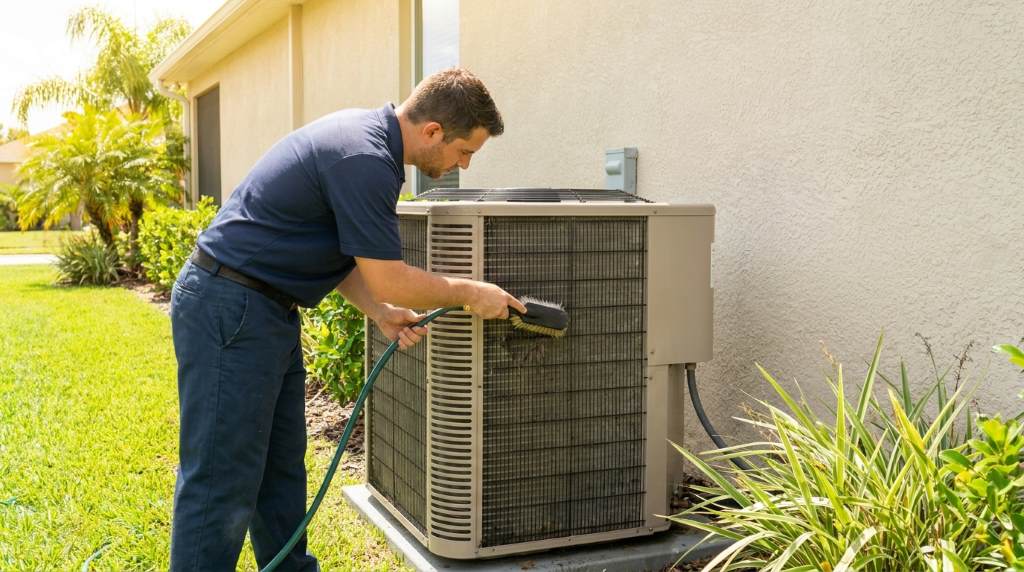
Dirty evaporator or condenser coils can reduce heat transfer efficiency. Likewise, a blocked condensate drain can create moisture problems and interrupt normal operation.
Ask the technician to measure system performance rather than simply performing a visual inspection. Useful measurements can reveal airflow restrictions, temperature differences, abnormal pressures, and other problems affecting efficiency.
OUC’s Efficiency Delivered program can provide qualifying customers with assistance for improvements that may include AC tune-ups and duct repairs. Eligible households can receive up to $2,500 per home toward qualifying efficiency upgrades.
8. Know When an Aging AC Becomes the Problem
Maintenance cannot permanently fix an AC that has reached the end of its useful service life. Frequent repairs, declining cooling performance, unusual noises, and steadily increasing runtime can signal replacement needs.
Before replacing the unit, request a proper load assessment. An oversized replacement can create humidity and comfort problems, while an undersized system may struggle during Orlando’s hottest weather.
Compare the equipment’s efficiency rating, installation quality, warranty coverage, and expected operating cost. The cheapest equipment purchase can become expensive if poor installation causes persistent performance problems.
Also inspect the ductwork before choosing a larger system. Increasing equipment capacity cannot compensate for major duct leakage, inadequate returns, or severe airflow restrictions.
9. Stop Roof Problems From Increasing Cooling Costs
Roof deterioration can indirectly increase cooling demand by allowing moisture intrusion or reducing the building envelope’s thermal performance. Therefore, homeowners should address roofing problems before they create larger interior issues.
Watch for cracked materials, water stains, damaged flashing, leaks, and visible deterioration. Understanding curling shingle damage can help homeowners recognize when roof conditions deserve professional attention.
Do not apply roofing products over active leaks without identifying the underlying cause. Proper repairs protect insulation and interior materials while helping maintain a more stable indoor environment.
After significant roof work, reassess attic insulation and ventilation. Coordinating roofing and energy improvements can produce better results than treating each building component separately.
10. Build a Practical Orlando AC Savings Routine
The most effective savings plan combines several small improvements instead of relying on one expensive solution. Start with actions that cost little, then address larger efficiency problems using measured evidence.
Every month, record electricity usage, thermostat settings, unusual AC runtime, and major changes in household activity. This simple log can reveal whether a repair or behavioral change actually improved performance.
Before summer, replace or inspect filters, clear outdoor equipment, check drainage, and schedule maintenance. During the hottest months, close blinds during intense sun and avoid unnecessary heat-producing activities.
Finally, review your utility usage dashboard when available. OUC provides tools that help customers understand consumption and peak demand, allowing homeowners to identify better opportunities for reducing electricity use.
What Not to Do When Trying to Lower AC Bills
Some cost-cutting tactics can create larger problems or provide almost no meaningful savings. Avoid blocking vents, closing numerous supply registers, or turning the thermostat dramatically lower after leaving home.
Do not ignore strange sounds, burning smells, refrigerant concerns, repeated short cycling, or unexplained performance changes. These symptoms deserve professional evaluation before the equipment suffers additional damage.
Likewise, avoid choosing replacement equipment based only on its advertised efficiency rating. Correct sizing, duct design, installation quality, airflow, and commissioning all influence real-world performance.
A Simple 30-Day Plan to Cut Cooling Costs
Week 1: Review your electric bill, inspect filters, check vents, and record thermostat settings. Identify rooms that remain unusually warm or humid.
Week 2: Inspect attic access, insulation, visible ductwork, window coverings, and obvious air leaks. Seal appropriate minor gaps and remove airflow obstructions.
Week 3: Schedule professional AC maintenance if cooling performance remains weak. Ask for airflow, system performance, refrigerant, electrical, and condensate checks.
Week 4: Compare your new electricity usage against the previous period. Keep the improvements that reduce consumption without compromising indoor comfort.
Final Thoughts: Lower Bills by Fixing the Whole Cooling System
Lowering an Orlando AC bill requires more than turning the thermostat higher. Focus on airflow, humidity, insulation, roofing, equipment condition, and household electricity timing together.
Start with inexpensive changes today, then investigate persistent problems professionally. If your bill remains unusually high, contact a qualified HVAC professional and request measured diagnostics rather than assumptions.
For Orlando homeowners, this approach can improve comfort while reducing wasted energy throughout demanding cooling seasons. Take action now by checking your filter, thermostat, airflow, and utility usage before your next high-demand billing cycle.
Frequently Asked Questions
What temperature should I set my AC in Orlando?
A comfortable moderate setting around 78°F can reduce cooling demand, especially when combined with fans and humidity control.
Why does my AC run constantly in Orlando?
Constant operation can result from extreme heat, poor insulation, restricted airflow, duct leakage, incorrect sizing, or equipment problems.
Can ceiling fans lower my AC bill?
Yes, ceiling fans can improve perceived comfort and let you maintain a slightly higher thermostat setting.
Does roof insulation affect AC costs?
Yes, effective attic insulation and air sealing can reduce heat transfer and decrease the cooling load.
Should I replace my AC to lower my electric bill?
Replace an inefficient or failing system only after professional diagnostics confirm that repair cannot provide reasonable long-term value.