
If you share your home with a cat, you already know the struggle. Cat hair gets everywhere. It settles into carpet fibers, clings to furniture, and seems to multiply overnight. No matter how often you clean, the fur keeps coming back.
The good news is that you do not need expensive equipment or professional help to deal with it. There are plenty of simple, effective methods you can use right at home. This guide covers the best carpet cleaning tips for cat owners, from quick daily fixes to deeper cleaning routines. Therefore, whether you are dealing with a light dusting of fur or a full-blown shedding season, you will find something useful here.
Why Cat Hair Is So Difficult to Remove from Carpet
Cat hair is not like ordinary dust or debris. It is fine, lightweight, and often carries a slight static charge. This means it works its way deep into carpet fibers rather than sitting on the surface. A regular vacuum pass might pick up some of it, but a good portion stays embedded.
Additionally, cats shed constantly. Even short-haired breeds release thousands of hairs every day. Over time, this buildup creates a dense layer of fur woven into the carpet. The longer you leave it, the harder it becomes to remove.
Understanding this helps you choose the right tools and techniques. You need methods that loosen and lift the hair rather than just pushing it around. Fortunately, several household items and affordable tools do exactly that.
Essential Tools You Should Have at Home
Before diving into specific methods, it helps to gather the right tools. You do not need to spend a lot. Most of these items are affordable and widely available.
- A rubber-bristled broom or squeegee
- A vacuum cleaner with a motorized brush head or pet attachment
- Lint rollers or adhesive tape
- Rubber gloves
- A fabric softener spray solution
- A stiff-bristled carpet brush or pet hair remover brush
Having these on hand makes the process much easier. Additionally, many of these tools double as general pet fur removal aids for furniture and clothing, so you get extra value from each one.
The Rubber Glove Method
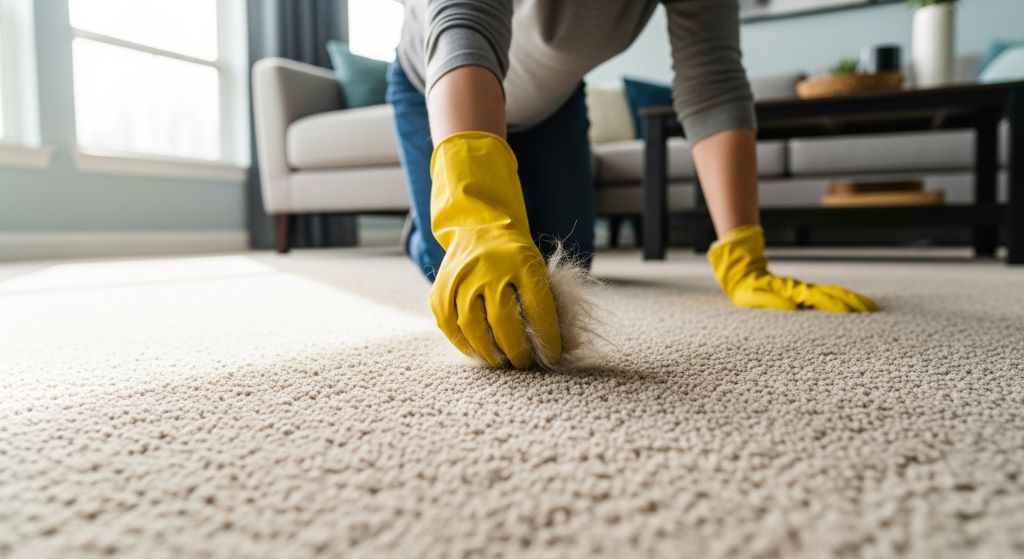
This is one of the easiest and most effective tricks for lifting cat hair from carpet. All you need is a pair of rubber household gloves.
Put the gloves on and lightly dampen them with water. Then run your hands across the carpet in long, sweeping strokes. The rubber creates friction against the carpet fibers. This friction pulls the cat hair up and rolls it into clumps. You can then pick up the clumps by hand or vacuum them up easily.
This method works especially well on low-pile carpets. However, it is also surprisingly effective on medium-pile rugs. It requires no special products and takes only a few minutes. Therefore, it is a great option when you need a fast solution before guests arrive.
Using a Rubber Broom or Squeegee
A rubber broom is one of the best tools a cat owner can own. Unlike traditional brooms, which tend to scatter loose fur, rubber brooms use static attraction to gather hair into neat piles.
To use it, sweep the broom across the carpet in one direction. You will notice the hair clumping together almost immediately. Work in sections and collect the piles as you go. A window squeegee works in exactly the same way. You can drag it across the carpet with firm, short strokes to pull hair to the surface.
This technique is particularly useful before vacuuming. It loosens deeply embedded hair and brings it to the surface, where the vacuum can pick it up more efficiently. Additionally, rubber brooms are durable and easy to clean, making them a long-term investment for any pet owner.
Vacuuming the Right Way
Most people vacuum regularly, but many do not vacuum in a way that effectively removes pet hair. There is a technique to it, and using the right approach makes a real difference.
Choose the Right Vacuum Attachment
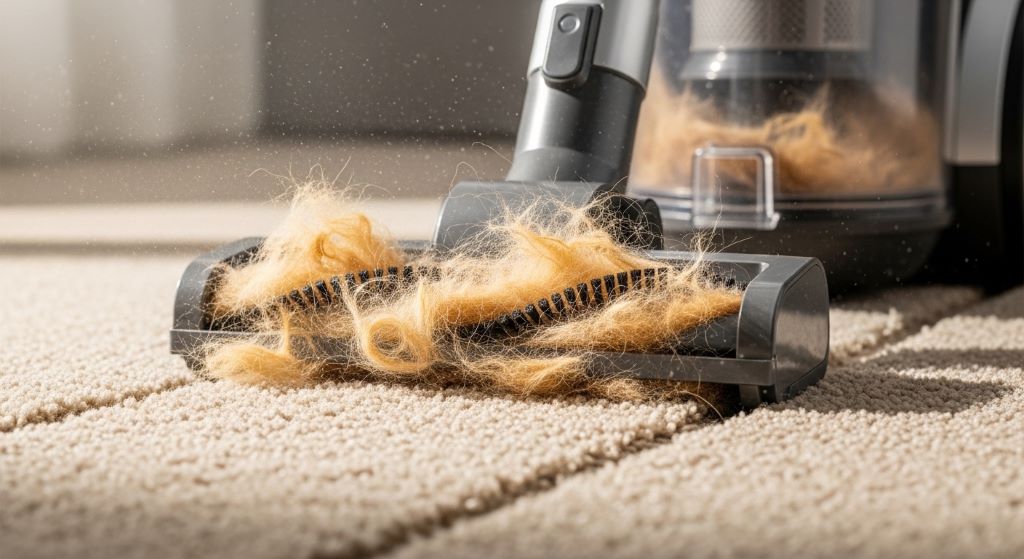
Use a motorized brush head or a turbo brush attachment if your vacuum has one. These spinning brushes agitate the carpet fibers and pull hair up from deep within the pile. A standard suction-only head will not do nearly as good a job.
Vacuum in Multiple Directions
Go over each area at least twice, once forward and once sideways. Cat hair embeds in the carpet in different orientations. Vacuuming in multiple directions helps dislodge more of it. This simple change alone can dramatically improve how much hair you remove.
Vacuum Frequently
During heavy shedding seasons, which typically occur in spring and autumn, you may need to vacuum every day or every other day. This prevents heavy buildup. However, even during lighter shedding periods, vacuuming two to three times a week keeps fur under control.
The Fabric Softener Spray Trick
This is a handy DIY solution that works well on carpets with stubborn fur. Mix a small amount of liquid fabric softener with water in a spray bottle. Shake it gently to combine.
Lightly mist the carpet and allow it to dry for a few minutes. The fabric softener breaks the static charge that causes cat hair to cling to carpet fibers. Once the carpet is dry, the hair loosens and becomes much easier to vacuum or brush away.
This is one of the most practical carpet cleaning tips you can use at home because it requires no special equipment and costs very little. However, make sure to use the mixture sparingly. Too much moisture can damage carpet backing or encourage mold growth if the carpet stays wet for too long.
Baking Soda: Clean and Deodorize at the Same Time
Cat hair often brings an odor with it. Baking soda is a natural deodorizer that also helps loosen pet hair from carpet fibers. It is safe, cheap, and easy to use.
Sprinkle a light layer of baking soda over the affected area of the carpet. Let it sit for about fifteen to thirty minutes. During this time, it neutralizes odors and helps break the bond between the hair and the fibers. After that, vacuum the area thoroughly. The baking soda brings the hair up with it as you vacuum.
Additionally, this method is completely safe for pets and children. You can use it as part of a weekly cleaning routine to keep your carpet fresh and fur-free.
Lint Rollers and Adhesive Tape
Lint rollers are not just for clothing. They work well on carpet too, especially for small areas or spot cleaning. Roll the lint roller firmly over the carpet surface. The adhesive picks up loose hair quickly and efficiently.
For larger areas, adhesive tape wrapped around your hand works in the same way. Press firmly and lift. You will be surprised how much fur it collects in just a few passes.
This method is ideal for high-traffic spots or areas where your cat sleeps regularly. However, it is less practical for entire rooms. Therefore, use lint rollers as a complement to other methods rather than as your sole tool.
Dealing with High-Pile and Shag Carpets
High-pile and shag carpets are much harder to clean than low-pile ones. The long fibers trap cat hair deep inside, and standard vacuuming often cannot reach it.
For these carpets, start by using a stiff-bristled brush to work through the fibers manually. Use short, firm strokes in one direction. This drags the embedded hair up to the surface.
After brushing, apply the fabric softener spray and let it dry. Then vacuum with a high-suction setting. You may need to repeat this process two or three times for very dense carpets. Additionally, consider placing washable rugs or mats in areas where your cat sleeps most. These are much easier to clean than wall-to-wall carpet.
Preventing Cat Hair Buildup in the First Place
Cleaning is important, but prevention makes your job much easier. A few simple habits can significantly reduce the amount of cat hair that ends up in your carpet.
- Brush your cat regularly. Daily brushing removes loose hair before it can shed onto your carpet. Use a deshedding brush for best results, especially during peak shedding seasons.
- Feed your cat a high-quality diet. Poor nutrition leads to excessive shedding. A diet rich in omega-3 fatty acids promotes a healthy coat and reduces hair loss.
- Use washable throws or blankets on your cat’s favorite resting spots. These catch the fur before it reaches the carpet and can be tossed in the washing machine.
- Keep the air in your home clean. Good ventilation and air purifiers with HEPA filters trap airborne cat hair before it settles into your carpet.
These small changes add up over time. Therefore, think of prevention as a long-term pet fur removal strategy that reduces how often and how hard you have to clean.
When to Consider a Professional Clean
Most cat hair problems can be handled at home with the right tools and techniques. However, there are situations where professional carpet cleaning makes sense.
If you have not deep-cleaned your carpet in over a year, a professional steam cleaning can remove allergens, odors, and deeply embedded fur that home methods cannot fully address. This is especially important for households where someone has a pet allergy.
Additionally, if your carpet has significant staining from pet accidents alongside the hair buildup, a professional clean will treat both problems at the same time. Consider scheduling a professional clean once or twice a year as part of your overall home maintenance routine.
Conclusion
Removing cat hair from carpet does not have to be a frustrating chore. With the right tools and a consistent routine, you can keep your home clean and fur-free without spending a fortune.
Start with simple methods like the rubber glove technique or a rubber broom to loosen hair before vacuuming. Use fabric softener spray or baking soda to tackle stubborn buildup. Vacuum frequently and always use a motorized brush attachment for best results. Additionally, build in preventive habits like regular grooming and using washable throws to reduce shedding at the source.
Whether you are looking for quick daily carpet cleaning tips or a deeper weekly routine, the methods in this guide will serve you well. Your carpet, your lungs, and your guests will all thank you for it.
Frequently Asked Questions
1. What is the fastest way to remove cat hair from carpet?
The fastest method is to put on a damp rubber glove and sweep your hand across the carpet. The friction pulls hair into clumps within seconds. You can then vacuum the clumps up or collect them by hand. This works well for a quick clean before visitors arrive.
2. Why does my vacuum not pick up all the cat hair?
Most standard vacuums struggle with pet hair because the hair embeds deep in carpet fibers. To improve results, use a motorized brush or turbo attachment and vacuum in multiple directions. Pre-treating the carpet with a rubber broom or fabric softener spray before vacuuming also helps significantly.
3. Is it safe to use fabric softener on carpet?
Yes, when diluted properly. Mix a small amount of liquid fabric softener with water in a spray bottle and apply it lightly to the carpet. Allow it to dry before vacuuming. Avoid saturating the carpet, as too much moisture can damage the backing or promote mildew growth.
4. How often should I clean my carpet if I have a cat?
Vacuuming two to three times a week is recommended for cat owners. During shedding seasons in spring and autumn, daily vacuuming may be necessary. A deeper clean using baking soda or fabric softener spray is best done once a week to manage odors and deeply embedded hair.
5. Can cat hair in carpet cause allergies?
Yes. Cat hair carries dander, saliva residue, and other allergens that settle into carpet fibers. For allergy sufferers, regular pet fur removal from carpets is essential. Vacuuming with a HEPA filter vacuum, using air purifiers, and scheduling professional steam cleaning at least once a year can all help reduce allergen levels significantly.
Related Topics: