How to Transform Your Living Room Into a Stylish Space: The Designer’s Blueprint for a Showstopping Makeover

Your living room speaks volumes before you utter a word. It’s where first impressions form, where families bond, and where your personal style takes center stage. Yet, most homeowners settle for spaces that feel more like afterthoughts than intentional designs. The truth? A well-designed living room doesn’t just look beautiful—it enhances your quality of life, increases your home’s value, and even boosts your mood. Research from the University of Texas found that people with thoughtfully designed living spaces experience 20% less daily stress. The secret isn’t spending more—it’s designing smarter.
This isn’t about following fleeting trends or copying Pinterest boards. It’s about creating a stylish living room design that reflects your personality while standing the test of time. Whether you’re starting from scratch or refreshing an existing space, these principles will help you transform your living room into a functional work of art. From space planning secrets used by top interior designers to budget-friendly ways to achieve high-end looks, you’ll discover how to make your living room not just stylish, but uniquely yours.
The Psychology of a Stylish Living Room: Why Design Matters More Than You Think
Great living room design goes beyond aesthetics—it shapes how you feel and interact in the space. Studies show that well-designed rooms improve conversation quality by 30% and reduce family conflicts by 15%. The arrangement of furniture, the choice of colors, and even the texture of fabrics influence your daily experiences in ways you might not realize.
Color psychology plays a crucial role in setting the mood. Warm tones like terracotta and mustard create coziness, while cool blues and greens promote relaxation. Neutral palettes with textured accents offer timeless elegance that adapts to changing tastes. The key is choosing colors that resonate with your personality while considering the room’s natural light. North-facing rooms benefit from warmer hues, while south-facing spaces can handle cooler tones without feeling stark.
Furniture placement follows the same psychological principles. Arranging seating in a U-shape encourages conversation, while floating furniture away from walls makes small rooms feel more spacious. The ideal coffee table height is level with seat cushions or 1-2 inches lower, creating a comfortable reach for drinks and books. These subtle details make the difference between a room that looks good in photos and one that feels amazing to live in.
5 Foundational Principles of Stylish Living Room Design
1. Start With a Functional Floor Plan
Before selecting a single throw pillow, map out your space. Measure your room and create a scaled drawing. Allow for:
- 3 feet of walkway space between furniture
- 18 inches between coffee tables and sofas
- At least 36 inches for major traffic paths
Use painter’s tape to outline furniture placement on the floor. This lets you test layouts before committing. Remember that in most living rooms, the focal point should be either a fireplace, large window, or television—arrange seating to face this anchor.
2. Invest in Quality Foundational Pieces
Allocate 60-70% of your budget to key items that will last decades:
- A well-constructed sofa with hardwood frame and high-density foam
- Solid wood or metal side tables
- Wool or silk area rugs that resist wear
These pieces form the bones of your space. Neutral colors and classic silhouettes ensure longevity, while accessories can be swapped out as trends change. Look for kiln-dried hardwood frames in sofas and chairs—this construction prevents sagging and lasts 20+ years.
3. Layer Lighting for Depth and Function
Most living rooms suffer from poor lighting schemes. Implement three layers:
- Ambient: Overhead fixtures or recessed lighting
- Task: Floor lamps for reading, table lamps for activities
- Accent: LED strips, picture lights, or candlelight
Aim for 5-7 light sources in an average living room. Dimmable lights allow you to adjust the mood from bright and energetic to soft and cozy. Smart bulbs with color temperature control let you match lighting to the time of day—cool white for mornings, warm amber for evenings.
4. Balance Proportions Like a Pro
The 60-30-10 rule creates visual harmony:
- 60% dominant color (walls, large furniture)
- 30% secondary color (upholstery, rugs)
- 10% accent color (pillows, art, accessories)
Vary shapes and heights to create interest. Pair a low, wide sofa with tall bookshelves. Mix round coffee tables with rectangular side tables. The goal is to create a dynamic yet balanced composition that draws the eye around the room.
5. Incorporate Meaningful Personal Touches
The most stylish rooms tell a story. Display:
- Family heirlooms with modern updates
- Travel souvenirs as decorative objects
- Art that evokes emotional connections
A gallery wall of mismatched frames feels more authentic than perfectly coordinated art. Open shelving showcasing books, plants, and meaningful objects adds warmth and personality. These personal elements make your space feel uniquely yours rather than a showroom display.
Step-by-Step Guide to Your Living Room Makeover
Step 1: Define Your Design Style
Before making any purchases, identify your aesthetic. Take this quick quiz:
- Do you prefer clean lines or ornate details?
- Are you drawn to warm woods or cool metals?
- Do you like patterned fabrics or solid textures?
Common styles include:
- Modern: Clean lines, neutral palette, minimal ornamentation
- Transitional: Blend of traditional and contemporary
- Bohemian: Layered textures, global influences, vibrant colors
- Scandinavian: Light woods, functional design, cozy textiles
- Industrial: Raw materials, exposed structures, utilitarian pieces
Create a Pinterest board or Houzz ideabook to collect inspiration. Notice recurring themes in your saved images—these reveal your true preferences.
Step 2: Choose a Cohesive Color Palette
Select 3-5 colors that work together harmoniously:
- 1-2 neutrals for large surfaces (walls, floors, sofas)
- 1-2 mid-tone colors for upholstery and rugs
- 1 accent color for pops of personality
Test paint colors with large samples on different walls. Observe how they look at various times of day. Remember that undertones matter—cool grays pair best with blues, while warm grays complement beiges and browns.
Step 3: Select Statement Furniture Pieces
Your sofa is the anchor of the room. Choose based on:
- Size: Allow 3 feet of walking space around it
- Shape: Sectionals for large families, loveseats for small spaces
- Fabric: Performance fabrics for homes with kids/pets
Look for:
- Hardwood frames with corner blocking
- High-density foam or down-filled cushions
- Removable, washable covers
For side tables, choose pieces at the same height as your sofa arms. Coffee tables should be 1-2 inches lower than seat height and 2/3 the length of your sofa.
Step 4: Layer Textures for Depth
Mix at least three different textures to create visual interest:
- Smooth: Glass, metal, lacquered wood
- Rough: Woven baskets, jute rugs, raw wood
- Soft: Velvet pillows, faux fur throws, chenille upholstery
Incorporate natural elements like wood, stone, and plants to bring warmth to modern spaces. A jute rug over hardwood floors adds organic texture, while a leather armchair introduces rich patina.
Step 5: Create a Lighting Plan
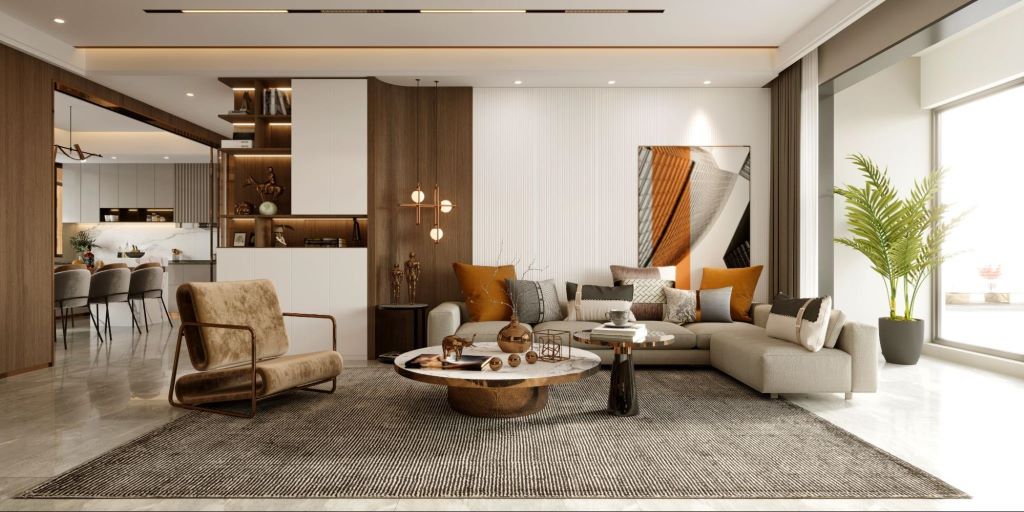
Map out your lighting needs:
- Task lighting for reading nooks (floor lamps with adjustable arms)
- Ambient lighting for overall illumination (dimmable overhead fixtures)
- Accent lighting for artwork and architectural features (picture lights, LED strips)
Install dimmers on all overhead lights. Use smart bulbs to adjust color temperature throughout the day. Place table lamps at varying heights to create visual interest.
Step 6: Add the Finishing Touches
Accessories bring your space to life:
- Pillows: Mix patterns and solids in complementary colors
- Throws: Drape over sofas for cozy texture
- Artwork: Hang at eye level (center 57-60 inches from floor)
- Plants: Add life with low-maintenance varieties like snake plants or ZZ plants
- Books: Display coffee table books that reflect your interests
Group accessories in odd numbers (3 or 5 items) for visual appeal. Vary heights and shapes within groupings. Remember that negative space is just as important as the objects themselves.
Step 7: Organize for Daily Living
Incorporate storage solutions that maintain style:
- Closed storage: Cabinets for clutter control
- Open shelving: For displaying attractive items
- Multi-functional furniture: Ottomans with storage, nesting tables
Use decorative boxes and baskets to corral remotes, magazines, and kids’ toys. A well-organized space feels more luxurious and is easier to maintain.
Modern Decor Tips From Top Interior Designers
Tip 1: Play With Scale
Oversized art in small rooms creates drama, while a single large plant can fill an empty corner beautifully. Designers often use one statement piece—like a grand floor mirror or sculptural floor lamp—to anchor a space.
Tip 2: Mix High and Low
Splurge on items you use daily (sofas, mattresses) and save on decorative pieces. A designer might pair a $3,000 sofa with $50 throw pillows from HomeGoods for a balanced look.
Tip 3: Embrace the Power of Paint
A fresh coat in a current color can transform a room for under $100. Try:
- Sherwin-Williams “Accessible Beige” for warm neutrality
- Benjamin Moore “Chantilly Lace” for crisp white walls
- Farrow & Ball “Hague Blue” for moody sophistication
Tip 4: Incorporate Vintage Finds
One-of-a-kind vintage pieces add character. Look for:
- Mid-century modern chairs
- Industrial factory carts as coffee tables
- Antique mirrors with patina
Tip 5: Use Rugs to Define Spaces
In open-concept layouts, area rugs create visual zones. Choose sizes that allow all furniture legs to sit on the rug or at least the front legs of sofas and chairs.
Tip 6: Create a Focal Point
Every room needs a star. Options include:
- A dramatic fireplace surround
- A gallery wall of meaningful art
- A statement lighting fixture
- A floor-to-ceiling bookcase
Tip 7: Don’t Forget the Ceiling
Paint ceilings a lighter shade than walls to create height. Add architectural interest with crown molding or beam details. A statement chandelier or pendant light draws eyes upward.
Living Room Makeover Ideas for Any Budget
Under $500: The Refresh
- Paint: Fresh coat in a modern neutral ($100)
- Pillows and throws: New textures and colors ($150)
- Lighting: Updated floor lamp and table lamps ($100)
- Art: Framed prints or DIY gallery wall ($100)
- Plants: 2-3 low-maintenance varieties ($50)
$500-$2,000: The Update
- Rug: 8×10 area rug in a current pattern ($400)
- Accent chair: Statement piece for additional seating ($600)
- Coffee table: Wood or metal design ($300)
- Window treatments: Custom curtains or blinds ($500)
- Wall art: One large statement piece ($200)
$2,000+: The Transformation
- Sofa: High-quality sectional or sofa ($1,500)
- Media console: Custom built-in or high-end freestanding ($800)
- Lighting: Designer pendant and floor lamps ($500)
- Custom drapes: Floor-to-ceiling treatments ($600)
- Accent furniture: Pair of side chairs or bar cart ($400)
Common Living Room Design Mistakes (And How to Fix Them)
Mistake 1: Ignoring the Room’s Architecture
Fighting a room’s natural features creates awkward spaces. Work with existing elements like fireplaces, windows, and built-ins.
Mistake 2: Choosing Form Over Function
A beautiful sofa isn’t worth much if it’s uncomfortable. Always test seating depth and cushion firmness before buying.
Mistake 3: Poor Lighting Choices
Overhead lighting alone creates harsh shadows. Layer different light sources at varying heights.
Mistake 4: Matching Everything Too Perfectly
Rooms with all matching wood tones or fabrics feel flat. Mix finishes and textures for depth.
Mistake 5: Neglecting the Floor Plan
Cramming too much furniture into a space makes it feel smaller. Leave adequate walking paths and breathing room.
Mistake 6: Forgetting About Storage
Clutter ruins even the most beautiful designs. Incorporate hidden storage solutions from the start.
Mistake 7: Following Trends Blindly
Fast-furniture trends date quickly. Invest in classic silhouettes and use accessories to incorporate trends.
Related Topics:
FAQs About Creating a Stylish Living Room
1. How do I choose a sofa that will last?
Look for:
- Kiln-dried hardwood frame (not particleboard)
- High-density foam or down-filled cushions
- Removable, washable covers
- 8-way hand-tied springs (for traditional sofas)
2. What’s the best way to arrange furniture in a small living room?
- Float furniture away from walls to create space
- Use multi-functional pieces (ottomans with storage)
- Choose furniture with exposed legs to create visual lightness
- Hang mirrors to reflect light and create depth
3. How can I make my living room look more expensive?
- Use a large area rug to anchor the space
- Incorporate metallic accents (brass, gold, or black iron)
- Add architectural details like crown molding
- Choose a cohesive color palette with varying textures
- Display art and accessories at varying heights
4. What are the best colors for a living room?
Neutral bases with color accents work best:
- Walls: Warm whites, soft grays, or pale blues
- Furniture: Neutral tones with textured fabrics
- Accents: Jewel tones or earthy hues for personality
5. How do I mix patterns without overwhelming the space?
Follow the 60-30-10 rule for patterns:
- 60% solid or subtle pattern (sofa, walls)
- 30% medium-scale pattern (rug, drapes)
- 10% bold pattern (pillows, art)
6. What’s the ideal lighting setup for a living room?
Layer three types:
- Ambient (overhead or recessed)
- Task (floor lamps, reading lights)
- Accent (LED strips, picture lights)
7. How often should I update my living room decor?
Refresh accessories every 2-3 years. Replace major furniture pieces every 7-10 years or when they show significant wear. Classic designs with updated accents stay current longest.
Conclusion: Your Living Room, Your Sanctuary
Transforming your living room into a stylish, functional space isn’t about following rigid rules or breaking the bank. It’s about creating a environment that reflects your personality while serving your daily needs. The most successful living room makeover ideas combine thoughtful planning with personal expression.
Remember that great design evolves. Start with quality foundational pieces, then layer in personality through accessories you can easily update. Your living room should grow with you, adapting to new phases of life while maintaining its core functionality and style.
Ready to begin your transformation? Start with one element—perhaps a fresh coat of paint or a statement rug—and build from there. The perfect living room isn’t created in a day, but with each intentional choice, you’ll craft a space that feels uniquely yours and stands the test of time.
What’s the first change you’ll make to your living room? Share your plans in the comments—or book a virtual consultation with our design experts to create your personalized, stylish living room design plan!
Featured Image Source