
Making fresh pasta at home is one of the most rewarding things you can do in the kitchen. The texture is silkier, the flavor is richer, and the experience feels deeply satisfying. However, many home cooks feel intimidated by the process. The good news is that with a manual noodle machine, anyone can turn simple ingredients into restaurant-quality pasta. You do not need a culinary degree. You just need a little patience and the right technique.
This guide walks you through every step, from mixing the dough to cutting perfect strands, so you can cook like an Italian chef right in your own kitchen.
Understanding Your Manual Noodle Machine
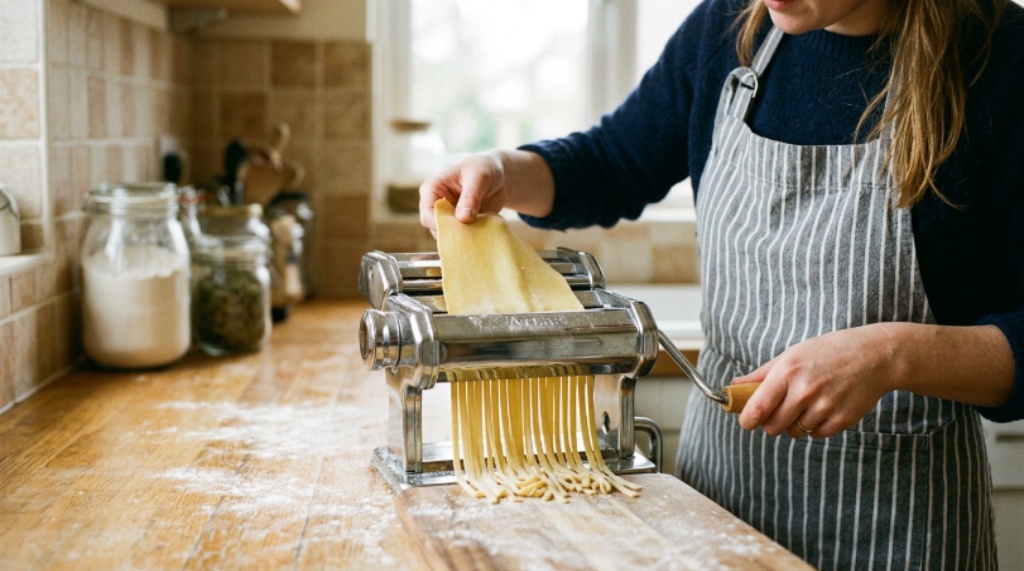
Before you start cranking, it helps to understand what your machine actually does. A manual noodle machine is a compact countertop tool with two main functions. First, it rolls pasta dough into thin, even sheets. Second, it cuts those sheets into noodles of various widths.
Most machines come with multiple roller settings, usually numbered from one to nine. Lower numbers produce thicker sheets. Higher numbers give you paper-thin pasta. Additionally, most models include at least two cutting attachments — one for wider noodles like tagliatelle and one for thinner strands like spaghetti.
The machine clamps to the edge of your countertop for stability. Therefore, always make sure your surface is clean and dry before attaching it. A wobbly setup leads to uneven pasta, which is the last thing you want after putting in all that effort.
Gathering Your Ingredients
Italian chefs keep pasta simple. You only need a few ingredients to make excellent fresh pasta.
- 2 cups of “00” flour or all-purpose flour
- 2 large eggs
- 1 tablespoon of olive oil
- A pinch of salt
- 1 to 2 teaspoons of water, if needed
“00” flour is finely milled and produces a smoother, more delicate dough. However, all-purpose flour works just as well for beginners. The eggs add richness and help bind everything together. Olive oil keeps the dough pliable and easy to work with.
Making the Dough the Italian Way
The way you make the dough matters just as much as the ingredients. Italian chefs always mix pasta dough by hand. This gives them better control over the texture.
Start by pouring your flour onto a clean, flat surface. Shape it into a mound and create a well in the center. Crack the eggs into the well and add the olive oil and salt. Using a fork, slowly beat the eggs and begin pulling flour from the inner edges of the well. Continue mixing until the dough becomes too thick to use a fork.
Switch to using your hands at this point. Knead the dough for about eight to ten minutes. You want it to feel smooth, firm, and slightly elastic — similar to soft clay. If it feels sticky, add a small amount of flour. If it feels too dry and crumbly, add a few drops of water.
Once the dough is ready, wrap it in plastic wrap or cover it with an inverted bowl. Let it rest for at least thirty minutes at room temperature. This step is essential. Resting allows the gluten to relax, which makes rolling much easier.
Setting Up for Rolling
After the dough has rested, cut it into four equal portions. Work with one portion at a time and keep the rest covered so they do not dry out.
Flatten one portion with your palm until it is roughly the thickness of a thick pancake. Set your manual noodle machine to the widest setting, which is usually number one. Feed the dough through the rollers while turning the crank steadily with your other hand.
Fold the sheet in thirds, like a letter, and feed it through again. Repeat this two or three times on the same setting. This process is called laminating, and it builds a smooth, even texture in the dough. Italian chefs do this instinctively, and it makes a noticeable difference in the final result.
Rolling the Dough Thinner
Once the dough feels smooth and consistent on the widest setting, begin progressing through the numbers. Move to setting two, then three, and so on. Feed the sheet through each setting once without folding.
Hold the sheet gently with one hand as it comes out of the rollers. Do not pull it — just guide it. Pulling stretches the dough unevenly. Additionally, lightly dust the sheet with flour if it starts to stick to the machine or to itself.
For most noodle types, you will stop at setting five or six. Thinner settings are ideal for delicate pasta like angel hair or when making filled pasta. For standard spaghetti or linguine, settings five through seven work best.
Cutting the Noodles
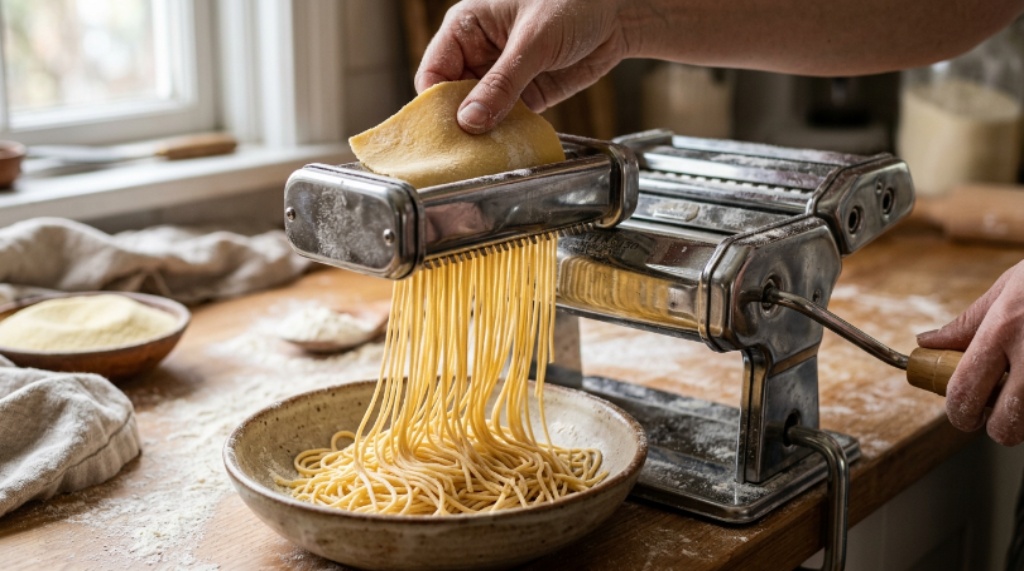
This is where the pasta cutter tool comes into play. Once your sheet is at the right thickness, attach the appropriate cutting head to your machine. Most sets include a narrow cutter for thin noodles and a wider cutter for broader shapes.
Lightly dust the sheet with flour before cutting. This prevents the strands from sticking together as they come out. Feed the sheet through the pasta cutter tool at a slow, steady pace. Use your free hand to catch the noodles as they emerge and lay them gently on a floured surface or a drying rack.
If the noodles clump together, you have not used enough flour. Simply toss them gently to separate the strands. Italian chefs often let fresh pasta air-dry for fifteen to twenty minutes before cooking. This firms up the surface slightly and prevents the pasta from becoming mushy in the pot.
Cooking Fresh Pasta Properly
Fresh pasta cooks much faster than dried pasta. Therefore, do not walk away from the stove. Bring a large pot of generously salted water to a rolling boil. Drop in the noodles and cook for just two to four minutes, depending on thickness.
Taste the pasta every minute after the two-minute mark. It should be tender but still have a very slight bite. This is what Italians mean when they say “al dente.” Drain the pasta quickly and toss it immediately with your sauce. Fresh pasta absorbs sauce quickly, so serve it right away for the best results.
Caring for Your Machine
Taking care of your equipment ensures it lasts for years. Never wash your manual noodle machine with water. Instead, use a dry brush or a soft cloth to remove any dried dough after each use. Most machines come with a small cleaning brush for this purpose.
Store the machine in a dry place, away from moisture. Occasionally apply a tiny drop of food-safe oil to the rollers to keep them turning smoothly. With proper care, a well-made machine will serve you faithfully for decades — just like the ones found in Italian family kitchens passed down through generations.
Conclusion
Making fresh pasta at home is a skill that improves with every batch. By understanding your manual noodle machine, mastering the dough, and learning how to roll and cut properly, you can produce noodles that rival what you would find in a trattoria in Bologna or Rome. The process takes time, but that time is part of the joy. Additionally, once you have tasted homemade pasta, the dried kind from a box will never feel quite the same. Start simple, stay patient, and let the machine do the hard work.
Frequently Asked Questions
How thick should the dough be before feeding it into the machine?
Before using the machine, flatten your dough to about half an inch thick. This makes it easier to feed through the widest roller setting without tearing.
Why does my pasta keep tearing when I roll it?
Tearing usually means the dough is too dry or has not rested long enough. Make sure you rest the dough for at least thirty minutes and keep it covered to prevent it from drying out.
Can I use whole wheat or gluten-free flour with a manual noodle machine?
Yes, you can. However, whole wheat dough is stiffer and may require a bit more water. Gluten-free dough can be more fragile, so roll it gently and work quickly.
How do I store fresh pasta if I am not cooking it immediately?
Dust the cut noodles generously with flour and let them dry on a rack for about thirty minutes. Then transfer them to an airtight container and refrigerate for up to two days, or freeze for up to a month.
What sauces work best with hand-cut fresh pasta?
Fresh pasta pairs beautifully with light, butter-based sauces, simple tomato sauce, or classic carbonara. Because fresh pasta is delicate, heavy meat sauces can sometimes overpower it, though a slow-cooked Bolognese is always a beloved exception.