
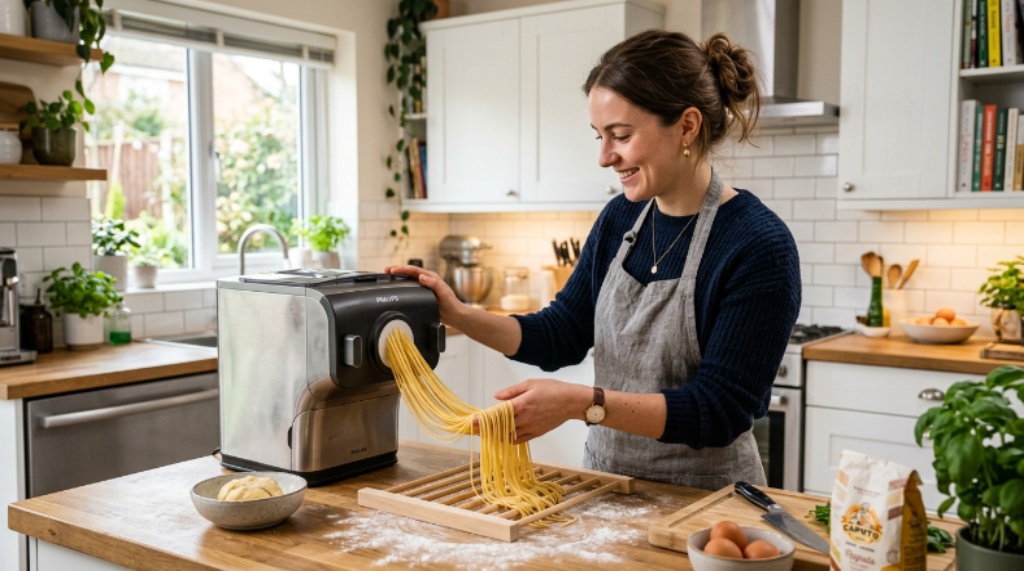

Making fresh pasta at home used to require skill, time, and a lot of patience. You needed to mix dough by hand, roll it out carefully, and cut it into even strips without tearing it. Today, things are very different. A fully automatic pasta maker does all of that work for you with the press of a button.
If you have never owned one before, the buying process can feel confusing. There are many models available at different price points, and the features vary quite a bit. However, once you understand what to look for, the decision becomes much easier.
This pasta machine guide is written specifically for beginners. It covers everything from how these machines work to what features actually matter in daily use. By the end, you will know exactly what to look for before making a purchase.
How a Fully Automatic Pasta Maker Works
A fully automatic pasta maker combines mixing, kneading, and extruding into one continuous process. You add your ingredients, the machine does the rest, and fresh pasta comes out through a shaping die at the end.
Most machines follow a simple sequence. First, you add flour directly into the mixing bowl. Then you pour in water or eggs through a separate inlet. The machine measures, mixes, and kneads the dough automatically. Once the dough reaches the right consistency, it pushes through a die to create your chosen pasta shape.
The entire process usually takes between ten and fifteen minutes. This is far faster than making pasta by hand, and the results are consistently good. Additionally, because the machine controls the mixing speed and pressure, beginners get professional results even without any prior experience.
Key Features to Look for in a Beginner-Friendly Machine
Not all automatic pasta makers are created equal. Some are built for speed, others for versatility, and some for ease of cleaning. As a beginner, you want a machine that balances all three without being overly complicated to operate.
Motor Power and Kneading Performance
The motor is the heart of any automatic noodle machine. A stronger motor handles tougher doughs more effectively and runs quieter over time. For home use, look for a motor rated between 150 and 250 watts. This range is powerful enough for most pasta types without making the machine unnecessarily large or loud.
Weak motors struggle with thicker doughs and may overheat during longer sessions. Therefore, checking the motor rating before buying is one of the most important steps in the process.
Die Shapes and Pasta Variety
The shaping die determines what type of pasta the machine produces. Most entry-level machines include between three and eight dies in the box. Common options include spaghetti, fettuccine, penne, and lasagne sheets.
Some machines allow you to purchase additional dies separately, which expands your options over time. If you enjoy cooking a wide range of pasta dishes, look for a model that supports interchangeable dies. Additionally, make sure the dies are easy to remove and clean, as this is often where beginners run into frustration.
Automatic Measuring and Ingredient Dispensing
One of the biggest advantages of a smart pasta appliance is its ability to handle ingredient ratios automatically. Many models include a built-in scale or measuring cup system that tells you exactly how much flour and liquid to add. Some higher-end machines dispense the liquid automatically once you set the number of servings.
This feature removes a lot of guesswork, especially for beginners who are not yet familiar with dough consistency. However, even if your machine does not include automatic dispensing, a clear measuring system is still a significant time-saver.
Speed Settings and Programs
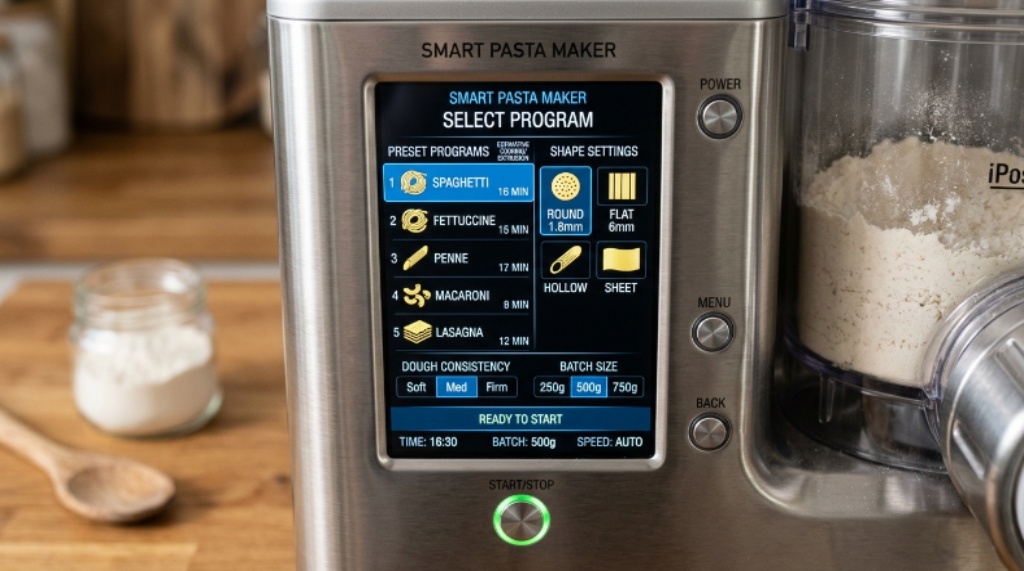
Many machines offer multiple speed settings or preset programs for different pasta types. A slower speed works better for firmer doughs, while a faster setting suits lighter, softer doughs. Pre-set programs take the thinking out of the process entirely by adjusting the mixing speed and kneading time based on the type of pasta you select.
For a beginner, preset programs are especially useful. They help you get consistent results while you are still learning how the machine behaves with different flour types and recipes.
Ease of Cleaning
Cleaning is one of the most overlooked factors when buying any kitchen appliance. Pasta machines can accumulate dried dough in small crevices if they are not cleaned promptly after use. Look for machines with removable, dishwasher-safe parts wherever possible.
Some models come with a cleaning brush specifically designed to clear dough from the die holes. This small accessory makes a noticeable difference in how easy the machine is to maintain over time. Additionally, machines with fewer internal components are generally simpler to keep clean.
Understanding Pasta Machine Price Ranges
Automatic pasta makers span a wide range of prices. Understanding what each tier offers helps you set a realistic budget.
Entry-level machines typically cost between $60 and $120. They are compact, simple to use, and come with a basic set of dies. These are a great starting point for beginners who want to try fresh pasta without a large upfront investment. However, they may lack some of the automation features found in more expensive models.
Mid-range machines fall between $120 and $250. This tier usually includes a more powerful motor, a wider selection of dies, and additional preset programs. Many mid-range models also feature automatic liquid dispensing. For most home cooks, this range offers the best balance of capability and value.
High-end machines priced above $250 often include advanced features such as digital touchscreens, Wi-Fi connectivity, and compatibility with recipe apps. These are ideal for enthusiastic home cooks who want the full smart pasta appliance experience. However, for someone just starting out, the premium features may not be immediately necessary.
Types of Pasta You Can Make at Home
One of the joys of owning an automatic pasta maker is the variety it unlocks. With the right dies, you can make far more than just spaghetti.
Here are some popular options beginners often enjoy making first:
- Spaghetti: the most classic choice and usually the easiest to master
- Penne: great for holding chunky sauces and simple to cut to size
- Fettuccine: a flat, wide noodle that pairs well with creamy sauces
- Linguine: similar to spaghetti but slightly flatter and more delicate
- Lasagne sheets: flat and wide, perfect for layered baked pasta dishes
- Rigatoni: a ridged tube shape that works well with thick meat sauces
Therefore, even a basic machine with a small set of dies gives you plenty of variety to explore across many different recipes.
Tips for Getting the Best Results as a Beginner
Even with the best automatic noodle machine, a few good habits make a real difference in the quality of your pasta.
Start with the right flour. Most pasta recipes call for either all-purpose flour or semolina flour. Semolina produces a firmer, more textured pasta that holds its shape well during cooking. All-purpose flour gives a softer result. Many beginners find that a blend of the two works best.
Always measure your ingredients carefully. Even machines with automatic measuring benefit from precise inputs. Too much liquid makes the dough sticky and difficult to extrude. Too little liquid results in crumbly dough that breaks apart.
Cook fresh pasta immediately or dry it before storing. Fresh pasta cooks in just two to four minutes, so keep an eye on it. If you are not cooking it right away, spread it out on a floured surface or a drying rack and allow it to dry for at least thirty minutes before storing it in an airtight container.
Conclusion
Buying a fully automatic pasta maker as a beginner does not have to be complicated. Start by identifying what matters most to you, whether that is ease of use, variety of shapes, or automatic ingredient measuring. Set a realistic budget and focus on motor power, die options, and cleaning convenience.
This pasta machine guide has covered all the key areas you need to consider before making a purchase. The market offers great options at every price point, from simple entry-level machines to full smart pasta appliances packed with modern features. The right choice depends on how often you plan to cook, what types of pasta you enjoy most, and how much automation you want in the process.
Fresh pasta at home is one of the most rewarding cooking experiences there is. With the right machine, it is also one of the easiest. Take your time, compare your options, and you will find a machine that brings genuine joy to your kitchen for years to come.
Frequently Asked Questions
How long does it take to make pasta with a fully automatic machine?
Most machines complete the mixing, kneading, and extruding process in ten to fifteen minutes. Cooking the pasta takes an additional two to four minutes, so you can have fresh pasta on the table in under twenty minutes from start to finish.
What type of flour works best in an automatic pasta maker?
Semolina flour is the traditional choice and produces firm, textured pasta. All-purpose flour gives a softer result. Many beginners find that a 50/50 blend of both produces the best overall texture and flavor.
Are automatic pasta makers difficult to clean?
Most modern machines are designed with cleaning in mind. Look for models with removable, dishwasher-safe parts and a cleaning brush for the dies. Cleaning is easiest when done promptly after use, before any dough has a chance to dry and harden.
Can I make gluten-free pasta in an automatic pasta maker?
Yes, many machines can handle gluten-free flour blends. However, gluten-free dough behaves differently from traditional dough and may require some experimentation with water ratios. Check that your machine supports alternative flours before purchasing.
How many servings can a typical automatic pasta maker produce at once?
Most home machines are designed to make between two and four servings per batch. Some larger models can produce up to six servings. If you regularly cook for a bigger group, look for a machine with a larger mixing bowl capacity.


