
You love sleeping on your stomach, but you keep waking up with a stiff neck or a dull ache in your lower back. The culprit is likely your pillow. Standard pillows push your head and neck upward, forcing your spine out of its natural alignment. For stomach sleepers, a thick pillow is not just uncomfortable—it can lead to chronic pain and poor sleep quality. The solution is simple yet transformative: you need a thin pillow for stomach sleepers that keeps your spine straight while you rest. This guide walks you through exactly what to look for, how to test your current pillow, and which materials work best to protect your neck and preserve your sleep health.
What Makes a Pillow Suitable for Stomach Sleeping?
The Science of Spinal Alignment for Front Sleepers
When you sleep on your stomach, your head is turned to one side. A pillow that is too thick elevates your head at an unnatural angle, which twists the cervical spine and strains the muscles in your neck and shoulders. The goal is to maintain a neutral spine: your head should align with the rest of your vertebrae as if you were standing upright with good posture. A thin pillow for stomach sleepers typically measures between 1.5 and 3 inches in loft, allowing your head to rest without excessive tilt.
Ideal Loft and Firmness Levels
Loft—the height of the pillow when laid flat—is the most critical factor. For stomach sleepers, a low loft (under 3 inches) is essential. Firmness also matters. A soft or medium-soft pillow conforms to the shape of your head and neck without pushing back, which compensates for the awkward side-turning position. Avoid plush or ultra-soft pillows that offer zero support, as they can cause your head to sink too deeply and create a different angle of strain.
Why Most Standard Pillows Fail Stomach Sleepers
The Danger of Thick Memory Foam and Down Pillows
Standard memory foam pillows are often 4 to 6 inches thick. When used by a stomach sleeper, they force the head into hyperextension. Down pillows collapse unevenly, leaving some areas thick and others flat, which creates unpredictable support. Both scenarios lead to morning neck stiffness, headaches, and even tingling in the arms from compressed nerves. In short, buying a standard pillow marketed as “medium loft” is a gamble that front sleepers typically lose.
Common Misconceptions About Pillow Firmness
Many people believe a firmer pillow provides better support. This is true for back and side sleepers, but for stomach sleepers, firmness can be dangerous. A firm pillow resists compression, which means it holds the head high off the mattress. The result is a sharp angle between the neck and the rest of the spine. Instead, stomach sleepers need a pillow that compresses easily under the weight of the head while still offering enough resistance to prevent the head from burying into the mattress.
How to Measure Your Current Pillow
The Simple Compression Test
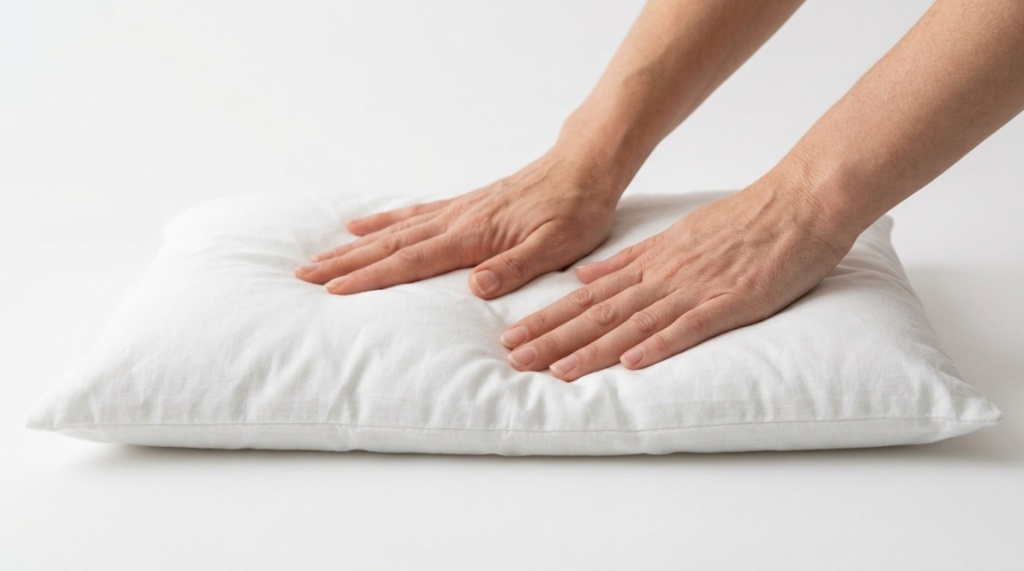
Place your pillow on a flat surface and measure its height at the center. Then, press down with the palm of your hand using gentle but consistent pressure (simulating the weight of your head). The compressed height should be no more than 3 inches for most stomach sleepers. If your pillow compresses to 4 inches or more, it is too thick. If it compresses to under 1 inch, it offers zero support and will cause your head to twist awkwardly.
Body Weight and Mattress Type Considerations
Your body weight and mattress firmness significantly affect your pillow needs. Heavier individuals compress a soft mattress more, which means the pillow needs to be thinner than average to maintain alignment. Conversely, lightweight individuals on a firm mattress may find a 2.5 inch pillow perfectly comfortable. The rule holds: your ear should be level with your shoulder, not above or below it.
Which Pillow Materials Work Best for Stomach Sleepers?
Shredded Latex: The Resilient Choice
Shredded latex pillows offer both adjustability and support. You can remove or add filling to achieve your ideal loft. Latex is naturally bouncy and breathable, which helps with temperature regulation. It resists dust mites and mold, making it a good option for allergy sufferers. The main drawback is the higher price point, but the durability often justifies the expense.
Microfiber and Polyester Fill: Budget-Friendly and Flattenable
Pillows made from microfiber or polyester fill start thick but can be flattened over time. Many stomach sleepers buy these pillows specifically to compress them under their own weight. They are inexpensive and easy to replace. However, they tend to clump or lose shape after a few months, and they may not provide consistent support across the whole surface.
Buckwheat Hulls: Firm Yet Thinnable
Buckwheat hull pillows are unique because they are naturally low-lofted and heavy. The hulls shift with your movement, molding to your head shape without springing back. You can also remove hulls to adjust the height. They are extremely supportive and last for years. The downside is the noise (a slight rustling sound) and the weight of the pillow itself; not everyone adapts to the feel.
Why Traditional Down Pillows Are Risky
Down pillows are soft and luxurious, but they are problematic for stomach sleepers. They compress unevenly, leaving some sections thick and others flat. This unpredictability can cause you to wake up with a sore neck. If you prefer down, look for a “low loft” or “thin” down pillow specifically designed for front sleepers, and be prepared to fluff it every night.
How to Use a Thin Pillow Effectively
Positioning for Maximum Benefit
Place the thin pillow under your head and neck only, not under your shoulders. Let your shoulders rest directly on the mattress. This prevents the pillow from lifting your upper body. If your forehead presses too deeply into the pillow, you may need an even thinner option or no pillow at all for your head (some stomach sleepers use a pillow only under their hips to reduce lower back strain).
Combining with a Hip Pillow for Lower Back Relief
Stomach sleeping often causes a swayback in the lower back. To fix this, place a very flat pillow or folded towel under your pelvis and lower abdomen. This tilts your pelvis forward and reduces the arch in your lumbar spine. When combined with a pillow for stomach sleepers for your head, you achieve full-body spinal alignment from neck to tailbone.
Can You Use a Thin Pillow for Other Sleeping Positions?
Versatility of Adjustable Thin Pillows
Yes, many thin pillows are adjustable, meaning you can add or remove filling. This makes them a good choice for people who switch positions during the night. If you start on your stomach but roll to your side, an adjustable thin pillow can be fluffed or folded to provide more height. Fixed thin pillows are less versatile but still work for back sleepers with a small frame.
When a Thin Pillow Is Not Enough
If you alternate between stomach and side sleeping, a single thin pillow may not suit both positions. Side sleepers need a pillow with a higher loft (4 to 6 inches) to fill the gap between the ear and the shoulder. In this case, consider a two-pillow system: one thin pillow for stomach sleeping and one thicker pillow for side sleeping. Alternatively, choose an adjustable pillow that can be reconfigured each night.
Practical Tips for Buying a Thin Pillow
Check Return Policies and Trial Periods
Pillow preference is deeply personal. Even if a pillow has the right specs on paper, you may not like its feel. Always choose a pillow from a retailer that offers at least a 30-day sleep trial and a hassle-free return policy. This allows you to test the pillow for several nights without financial risk.
Look for Removable and Washable Covers
Hygiene matters. A removable, machine-washable cover extends the life of your pillow and keeps allergens at bay. Zippered covers are ideal because they also allow you to adjust the filling if the pillow is adjustable. Avoid pillows with fixed, non-removable covers, as they trap sweat and dead skin cells and degrade faster.
Avoid Heavily Contoured Pillows
Contoured pillows with raised edges for neck support are designed primarily for back and side sleepers. They can work for stomach sleepers only if the contour is very shallow (less than 2 inches at the apex). Most contoured pillows are too high and will force your neck into an unnatural C-curve when you lie face down,If you are looking for budget-friendly alternatives to premium ergonomic options, read our guide on How to Get Cervical Pillow Comfort Without High Cost to find supportive neck solutions under a strict budget.
How to Transition from a Thick Pillow
Start Gradually with a Thin Folded Towel
If you have used a thick pillow for years, switching directly to a thin pillow can feel uncomfortable. Your muscles have adapted to a certain angle. Start by placing a folded towel inside your existing pillowcase alongside your thin pillow. Each night, remove one layer of towel until you are sleeping solely on the thin pillow. This gradual transition reduces neck strain and helps your muscles adapt.
Listen to Your Body During the First Week
Expect some mild soreness during the first three to five nights as your spine adjusts to proper alignment. This is normal. However, if you experience sharp pain, numbness in your arms, or headaches that linger, the pillow may be too thin or too firm. Reassess and consider adjusting the fill or trying a different material.
Frequently Asked Questions
Is a thin pillow better for neck pain in stomach sleepers?
Yes, a thin pillow is typically much better for neck pain in stomach sleepers because it keeps the cervical spine in a neutral position. Thick pillows force the neck into hyperextension, which is a common cause of strain. If you have chronic neck pain, switching to a thin pillow often provides significant relief within a week.
Can stomach sleepers sleep without a pillow?
Yes, many stomach sleepers sleep comfortably without a pillow under their head. Sleeping without a pillow allows the head to rest flat and naturally turned to the side. However, some people find that no pillow causes strain on the lower back. In that case, use a thin pillow under the hips instead of under the head.
What is the best pillow thickness for a stomach sleeper?
The best pillow thickness for a stomach sleeper is between 1.5 and 3 inches when compressed under the head. The exact ideal thickness depends on your body weight, mattress firmness, and personal comfort. A good rule is that your ear should be level with your shoulder while lying face down.
Are adjustable pillows worth it for stomach sleepers?
Yes, adjustable pillows are highly recommended for stomach sleepers. They allow you to remove or add filling to achieve the perfect loft. This is especially helpful if you change positions during the night or if your body weight changes. Adjustable pillows also tend to last longer because you can refresh the fill.
How often should stomach sleepers replace their thin pillow?
Stomach sleepers should replace their thin pillow every 12 to 18 months, or sooner if it loses shape or develops lumps. Even a thin pillow can retain allergens and bacteria over time. Wash the cover regularly and inspect the filling every few months to ensure it still provides uniform support.
Can I use a thin pillow if I have a large frame?
Yes, but you may need a slightly thicker pillow than a small-framed person. Larger individuals compress a mattress more, so their head sits lower relative to the shoulders. A 2 to 3 inch thin pillow often works well. If you have broad shoulders, ensure the pillow does not lift your head above the natural alignment of your spine.
What is the difference between a thin pillow and a travel pillow?
Travel pillows are designed for compact portability, not necessarily for proper sleep posture. Many travel pillows are thin but also very small in surface area. A dedicated thin pillow for stomach sleepers is larger and distributes support evenly across the head and neck. Travel pillows can be used as a temporary solution, but they are not a substitute for a properly sized thin pillow.
Conclusion
Choosing the right pillow as a stomach sleeper is not a luxury; it is a necessity for pain-free mornings and deep, restorative sleep. The key takeaway is simple: prioritize a low loft (under 3 inches) and a soft to medium-soft fill that conforms to your head without pushing it upward. Materials like shredded latex, buckwheat hulls, or adjustable microfiber offer the flexibility and support you need. Avoid thick memory foam and standard down pillows that are designed for other sleep positions. Measure your current pillow using the compression test, and if it fails, it is time to upgrade. A properly chosen thin pillow for stomach sleepers transforms your nights by aligning your spine, reducing neck strain, and preventing lower back discomfort. Take the time to test a pillow with a solid return policy, and do not be afraid to adjust your setup over time. Your body will thank you with better sleep, fewer aches, and greater energy throughout the day. The change starts tonight.